In 2025, the smartphone industry has a major “prestige” problem. We’ve reached a point where $1,000 is no longer the ceiling, but the floor for anything labeled a “flagship.” With devices like the S26 Ultra and iPhone 17 Pro Max pushing toward $1,300 and beyond, consumers are being conditioned to believe that “pro” performance requires a mortgage payment.
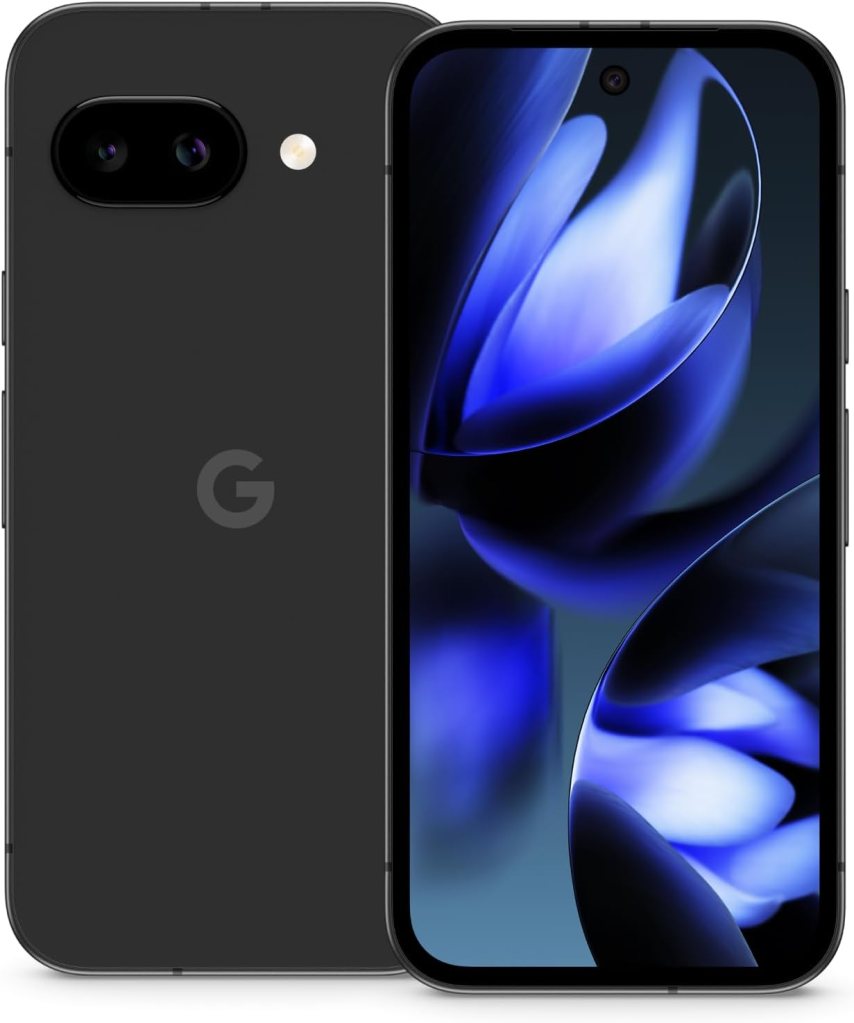
I’m here to tell you that’s marketing fluff. If you stop chasing spec-sheet dominance and look at real-world usability, the smart money is currently on a device many have already forgotten: the Google Pixel 9a. Now available for roughly $300, this “budget” phone isn’t just a compromise for the cost-conscious; it’s a value beast that arguably offers a better daily experience than phones costing four times as much.
The Seven-Year Promise: A $300 Phone for the Next Decade
The most offensive part of the flagship cycle is “disposable tech”—the idea that a $1,000 investment is only “current” for two years. The Pixel 9a shreds that narrative. Google has committed to a seven-year support lifecycle for this device. While the marketing suggests support until 2032, the technical security cutoff is April 2031.
Let’s be clear: having a $300 phone that remains safe, secure, and updated with the latest Android features for the next six-plus years is a game-changer. It transforms a “cheap phone” into a long-term utility. When your cost of ownership is less than $50 a year, you’ve officially won the smartphone game.
“For $300 I’m not sure you’re going to find a better supported device on the market.”
The Brightness Paradox: Outshining the $1,000 Competition
While spec-sheet warriors will whine about the lack of an LTPO panel, the reality is that your eyes won’t care as much as your wallet does. Yes, the 6.3-inch P-OLED display doesn’t scale down to 1Hz; it flips between 60Hz and 120Hz. In daily use? It’s buttery smooth.
But here is the real kicker: this $300 phone hits a staggering 2,700 nits of peak brightness. That is 100 nits brighter than the $1,300 S26 Ultra. It is a massive win for the budget consumer. You are getting better outdoor visibility on a “cheap” Google phone than on the most expensive flagship Samsung offers. This is the “Brightness Paradox”—proof that price tags and performance are no longer strictly correlated.

Flagship Brains in a Budget Body
The Pixel 9a features the Tensor G4—the exact same silicon found in the Pixel 9 Pro and the newer Pixel 10. While flagships charge you a $1,000 premium for that chip, Google gives it to you here for a fraction of the cost.
Don’t let the 8GB of RAM fool you. In real-world testing, app switching is fluid and the sustained performance is genuinely impressive. I’ve spent over an hour straight on GameCube emulation, and the device stayed remarkably cool. In fact, it maintained lower temperatures than the iPhone 17 Pro Max during heavy loads. This is the democratization of performance: the internal engine is no longer a bottleneck for the budget user.

Design for Minimalists (and Table-Users)
The Pixel 9a prioritizes functional design over flashy, fragile aesthetics. At 186g, it’s light enough to forget in your pocket, and the matte finish frame paired with a matte plastic back feels premium without the “glass back anxiety” of a flagship.
The best part? The camera module is nearly flush. Unlike the massive, protruding islands on modern “Ultras,” the Pixel 9a sits flat and won’t wobble when you use it on a table. Some critics harp on the larger screen bezels, but that’s a superficial complaint. When you’re actually using the phone, those bezels vanish. You’re getting a durable, IP68-rated device that focuses on what matters.
The “Magic” of Pixel Software Processing
The hardware—a 48MP main and 13MP ultrawide—is solid, but Google’s software processing is the real equalizer. This is where the Tensor G4 earns its keep. The AI-driven processing discovers detail in low light that the human eye simply misses, transforming “junk” shots into shareable content.
“It discovers detail that I could not see with my own eye.”
A Consumer Caveat: As an advocate, I have to mention long-term durability. Some users (myself included) have seen the wide-angle lens break or lose focus “out of nowhere.” Furthermore, the Pixel 9a uses the older XOS 5300 modem. While I haven’t personally had issues, some users report spotty connectivity compared to the newer Pixel 10a. It’s a trade-off you should know about before buying.
Real-World Stamina vs. Slow Charging
If you want a “two-day phone,” this is it. The Pixel 9a consistently delivers 8 to 10 hours of screen-on time. It is a marathon runner in a world of sprinters.
However, the “advocate” side of me must point out the compromise: charging speed. At 23W wired and 7.5W wireless, it takes nearly two hours to hit a full charge. If you’re the type of person who forgets to plug in and needs a 15-minute “top-up” before heading out, this will frustrate you. But if you charge overnight, the massive battery life makes the slow replenishment a non-issue.
Conclusion: The “Value Beast” Verdict
The Pixel 9a is a “value beast” that exposes the flagship market for what it is: a game of diminishing returns. You are getting the same brain as the Pro models, a screen that outshines the most expensive phones on the market, and a software commitment that lasts until 2031.
When you strip away the marketing prestige and the “Pro” branding, you’re left with a device that provides 90% of the flagship experience for less than 25% of the cost.
The Final Question: Would you trade a few “status symbol” features for a phone that costs $1,000 less but performs just as well and is supported just as long? For me, the answer is easy. Stop paying the flagship tax.








Leave a comment