The Closet Paradox
Your closet is likely a graveyard of “good intentions”—items too precious to toss, yet never worn. We live in a state of constant tension, caught between a genuine love for fashion and a growing guilt over the waste it generates. This stagnation turns our wardrobes into dead ends rather than part of a living system.
A unique Japanese shop called Closet to Closet (C2C) offers an evocative solution to this disconnect. Instead of viewing unwanted clothing as a burden, C2C treats textiles as part of a continuous, fluid loop. By focusing on circulation (Junkan) rather than simple consumption, the shop invites us to transform our relationship with the things we own.
The Beauty of the “Worthless” Item
Traditional resale models are built on a hierarchy of value, often rejecting anything that isn’t a high-end brand or in pristine condition. Customers like Iju, who brought in a skirt from a former boss and dresses from a party that “felt wrong,” often find traditional thrift stores buy back such items for mere pennies. This discourages participation in the circular economy by making the barrier to entry feel too high.
C2C founder Kogane operates on a counter-intuitive policy: she accepts almost anything. This includes “tatters,” previous remakes, or garments of entirely unknown origin. For Kogane, who wears a wardrobe composed almost entirely of C2C finds, the lack of a market price is exactly what makes an item interesting.
“I felt very attracted to clothes that are hard to put a value on in flea market apps or secondhand clothing stores. I wanted people to bring anything, even if it was tattered, remade, or they didn’t remember where they bought it.” — Kogane, Founder of Closet to Closet
From “Trash Bin” to “Delivery Service”
The success of C2C is rooted in a profound psychological shift among its community. Customers do not treat the shop as a place to dump unwanted debris; they see it as a way to “deliver” an item to its next life. This mindset is grounded in the ancient Japanese belief that a life force resides in all things, requiring them to be treated with dignity.
The shop’s operational model reinforces this sense of intentionality. It is reservation-only and opens just a few days a month, creating an intimate space where textiles are handled with care. By slowing down the transaction, Kogane ensures that the process of circulation feels like a meaningful exchange rather than a cold retail task.
The Radical Art of the Scrap
When an item is truly beyond repair as a garment, C2C refuses to let it reach a landfill. The shop practices “hyper-local” upcycling, where old shirts are reimagined as patchwork armrests or secondary design elements. Even the thread used for these repairs is donated by the community, keeping the entire lifecycle within a visible, creative loop.
This is not a passive process; it is a participatory one. Kogane hosts workshops where she teaches customers how to darn and patch their own items, transforming a hole into a decorative feature. This educational aspect proves that with enough community “power,” even a scrap of fabric can be granted a new, beautiful purpose.
Choosing “Depth” Over “Scale”
Kogane’s unconventional business strategy was born from her struggle to find a place within the traditional apparel industry. After being told she “should do it alone,” she built a model that rejects the pressure of mass expansion. Instead, she prioritizes the “temperature” of the shop, focusing on the depth of the culture she is creating.
This culture is sustained by the “Crew”—staff members who began as customers and fans of the shop’s mission. Long-term regulars like Uino, who transitioned from a customer to a crew member over three years, provide the human heartbeat of the space. They ensure the shop remains a sanctuary for those who value the soul of an object over its price tag.
“I’m more conscious of continuing for a long time than expanding the scale. I want to protect this ‘temperature’ until I die. The shape may change slightly to suit the life stages of everyone… but I want to work hard to protect this culture.” — Kogane, Founder of Closet to Closet
A New Life Cycle for Your Wardrobe
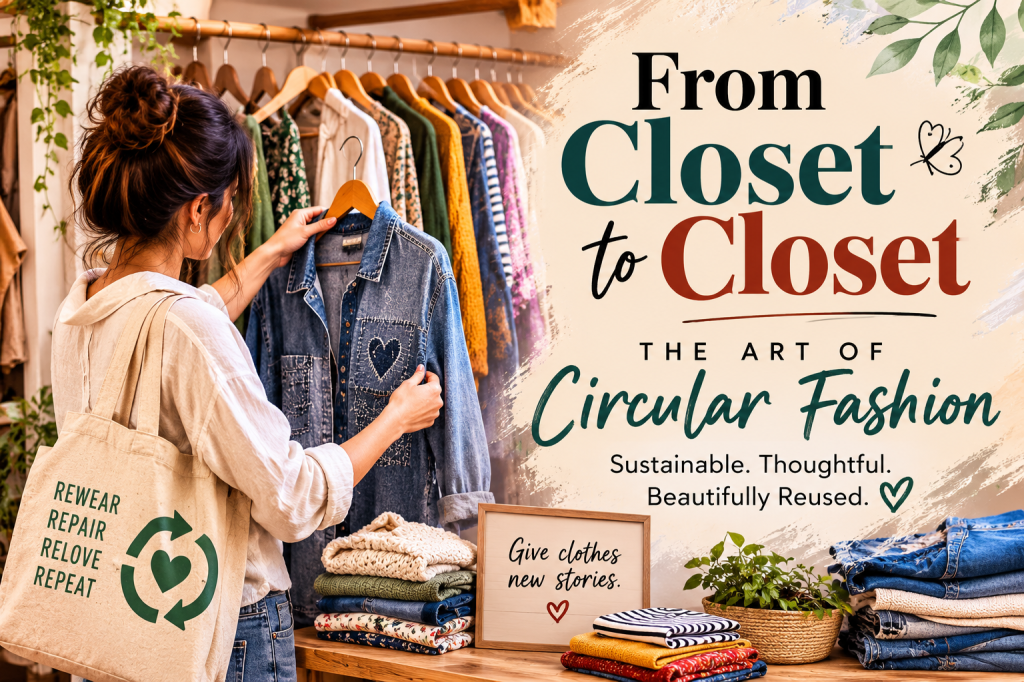
The “Closet to Closet” model provides a radical roadmap for moving beyond the “buy-consume-dispose” cycle. It reminds us that our possessions carry a history and a life force that doesn’t end just because we stop wearing them. By viewing our closets as part of a larger, circulating system, we can trade the guilt of ownership for the joy of stewardship.
If your clothes have a life force, are you a caretaker or a captor? The future of fashion isn’t just about what we buy—it’s about how we keep the circulation moving.

How does the Closet to Closet concept redefine clothing value?
The Closet to Closet concept redefines the value of clothing by shifting the focus from commercial transactions to longevity, emotional connection, and creative circularity. Instead of treating garments as temporary, disposable commodities, this approach transforms how clothing is valued in several key ways:
1. Shifting from Monetary to Sentimental Worth
In the mainstream fashion market, secondhand buying shops and flea market apps value clothes strictly by brand, rarity, or pristine condition, often buying unbranded or ordinary garments for mere pennies (such as 5 or 10 yen). Closet to Closet redefines value by welcoming any garment—even if it is unbranded, tattered, or has been remade. The value is placed entirely on the garment’s potential to be worn and appreciated again, rather than its commercial resale price.
2. Replacing “Waste” with “Delivery”
Rather than treating unwanted clothes as waste to be thrown out, customers participate with a mindset of care. They do not bring their clothes to treat the shop like a “trash bin”; instead, they bring them with a desire to “deliver” them to the next owner. This is built on a shared, empathetic connection: the belief that unworn clothes sleeping in one closet can become someone else’s precious, cherished garment.
3. Infinite Life through Upcycling and Repair
Under this concept, clothing value is never allowed to expire because no garment is ever thrown away. If an item cannot be reused in its original state, it is carefully mended (such as with decorative darning) or creatively upcycled into entirely new items, like turning old shirts into unique arm covers. By committing to reuse or remake everything, the shop ensures that the care and materials embedded in the clothing continue to circulate indefinitely.
4. Resolving the Fashion Lover’s Dilemma
For people who love fashion but feel deeply conflicted about how mass consumption harms the environment, Closet to Closet redefines fashion as a sustainable, communal culture rather than a destructive habit. It offers a space where clothing is valued as a shared resource, allowing people to enjoy changing their style without the environmental toll of buying new.
🎨 I can help you design a visual infographic outlining the journey of a garment through this circular system, showing how it moves from closet to closet or gets creatively upcycled.






Leave a comment