
The Low-Barrier Business Myth
Most aspiring entrepreneurs are paralyzed by a specific fiction: that a viable business requires a Silicon Valley pedigree, a seven-figure seed round, or a complex logistics network. This “high-barrier” myth keeps high-potential founders on the sidelines, waiting for a “sophisticated” idea while overlooking the high-margin goldmines hiding in plain sight.
The truth is that 2026’s most resilient ventures are built on “unsexy” arbitrage and the mastery of overlooked niches. By shifting focus from complex innovation to simple execution, you can identify opportunities that allow you to “fail small” while building a sustainable, high-cash-flow enterprise. The following models aren’t just side hustles; they are strategic masterclasses in Total Addressable Market (TAM) and extreme efficiency.
The “On Your Honor” Economy: Trust as a Labor Strategy
In a traditional food model, labor costs typically devour 30% of gross revenue. The “On Your Honor” economy—pioneered by front-porch sourdough stands and cookie bar mini-fridges—solves this by removing the human element from the point of sale entirely.
By utilizing QR codes and Venmo, entrepreneurs are effectively automating their retail footprint. Even if theft occurs, the losses are statistically negligible compared to the overhead of a staffed kiosk. This isn’t just a neighborhood gesture; it’s a high-retention service model with zero Customer Acquisition Cost (CAC) after the first local impression.
“You could look at the world as if, oh, people are so crooked… and you’ll be sad, and you’ll see in the world what you think it already is. Or you could be an optimist and say, “I’m going to do this because I can make a profit, and I think people are good.”
The $750,000 Grill Cleaning Gap
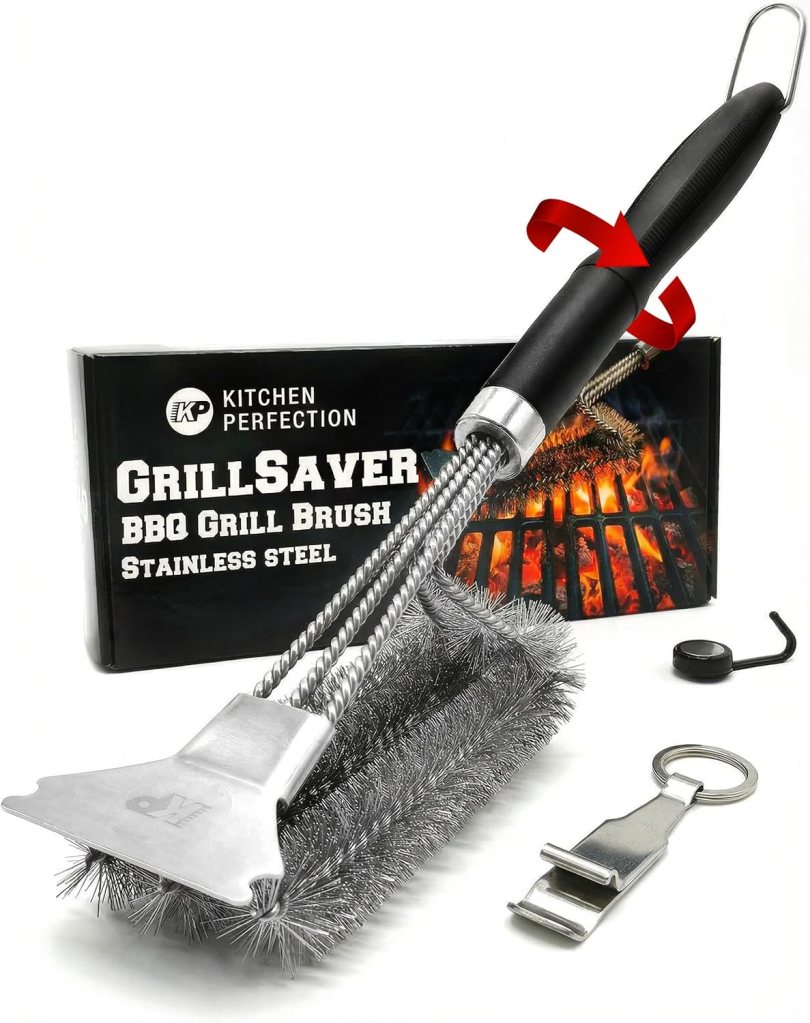
While tech founders chase the next SaaS trend, the real money is in the grime. Nationwide, 100 million households own a grill. In a representative market like Dallas-Fort Worth (DFW), there are 2.4 million households and only eight established competitors.
The math is undeniable: even with a conservative 1% market penetration (24,000 households), each business has access to 3,000 clients. At a 250 service price point**, that generates **750,000 in annual revenue. With costs limited primarily to gas and labor, this model sustains a 50% profit margin. More importantly, grill cleaning is the ultimate “foot in the door” strategy. Once you are on-site, the Lifetime Value (LTV) of that customer skyrockets through high-margin upsells like pressure washing, gutter cleaning, and outdoor kitchen deep cleans.
The Marshmallow Lesson: Why Ignorance is an Asset
The “Marshmallow Challenge” reveals a fundamental flaw in the professional mindset. When tasked with building a spaghetti tower, executives spend 15 minutes jockeying for power and planning for “structural integrity,” only to have their tower collapse the moment the marshmallow is added. Children, conversely, just start “shoving sticks into marshmallows.” They use failure as their data set.
This mirrors the success of “frozen grapes.” While “experts” might dismiss the idea—arguing that consumers can freeze their own grapes for $2—real-life data proves that shoppers will pay $8 to $10** for convenience and premium framing.
“You can just do things. Same product, different framing… Theoretical data is no substitute for real-life data.”
The lesson: The executives are the people telling you your idea is “dumb.” The children are the entrepreneurs in thousands of grocery stores selling frozen fruit at a 5x markup.
High-Margin Preservation: The CAPEX of Colostrum
Preservation technology allows you to turn perishable inventory into shelf-stable assets. Your entry into this market is a Capital Expenditure (CAPEX) decision:
- The Entry Level: A 50-tray dehydrator** allows for “fail small” experiments with fruit. David Blake used this model to scale to 10 units, netting **100,000 annually with zero employees.
- The Scaling Phase: A 2,000–5,000 freeze dryer removes 99% of moisture, preserving nutrients and extending shelf life to 25 years.
The most aggressive arbitrage in this space currently involves colostrum. By purchasing liquid colostrum from dairy farmers for 3.20 a gallon** and processing it through a freeze dryer, you produce **2.5 lbs of powder**. Selling that powder at **20/lb generates $46 in revenue from a single gallon of byproduct. That is a massive multiplier on raw material costs.
Micro-Gourmet: The 80% Gross Margin Front Yard
The “Dutch Poffertjes” (mini pancake) model is a masterclass in high-margin “micro-gourmet.” By purchasing a specialized burner for $78 to $179, you can create a pop-up experience in your front yard or at a local park.
Treating the product like frozen yogurt—layering low-cost toppings like chocolate and fruit—allows for price points of $10 to $15 per serving. With 80% gross margins, a five-hour window on a Saturday morning can generate the equivalent of a two-week paycheck. The strategy relies on organic “scarcity” marketing via NextDoor and Instagram, creating a local event without the overhead of a retail lease.
The Luxury Picnic: Selling an Experience, Not Just Food
Consumer behavior is shifting from “eating out” to “experiencing.” Luxury picnic services charge $440 to $700 for a two-hour setup. The genius here is that the entrepreneur owns no land and requires no chef certification; they are selling the “date” and the aesthetic.
By providing a curated environment—rugs, tables, and simple perishables like hummus and fruit—you provide an alternative to the traditional $300 restaurant bill. It is a highly scalable service model where the primary investment is high-quality short-form video content to capture the “experience” seekers.
The Seasonal Hustle: Watermelon Arbitrage
Watermelon is the ultimate low-risk training ground for entrepreneurs. It offers three distinct levels of “dumb” ideas that print money:
- “Wopsicles”: Sliced watermelon on a stick. 20-cent cost vs. $1.00 sale price.
- Watermelon Sandwiches: Using the fruit as “bread” with cheese filling. 75% of every dollar is pure profit.
- In-Fruit Slushies: Blending the inside of a mini-watermelon and selling the “vessel” with a straw. 2–3 cost vs. $9 sale price.
These aren’t just side hustles; they are laboratory experiments in foot traffic and sales. They teach you to manage inventory and cash flow with almost zero downside.
The Law of Reciprocity as a Lead-Gen Strategy
The underlying engine of these businesses is the Law of Reciprocity. People buy from those they like, know, and trust.
Giving away a 50-cent muffin or a free cup of coffee to your neighbors isn’t just a “nice gesture”—it is a sophisticated customer acquisition strategy. If you run a high-ticket service business like roofing or HVAC, that 50-cent muffin creates a social bond that can convert into a $5,000 contract.
The most successful entrepreneurs of 2026 aren’t waiting for the “perfect” plan. They are buying a $50 asset, testing a “dumb” idea, and failing fast. What asset do you already have—or could you acquire today for under $100—to start your first experiment?
How can I start a high-margin food business from home?
Here are several high-margin food businesses you can start from home, drawing directly from the provided examples:
1. Front-Yard Mini Pancakes (Dutch Pancakes) You can run a highly profitable mini pancake stand right from your front yard or a busy street corner.
• The Model: You make a base of mini pancakes (also known as Poffertjes) and offer various toppings like fruit and chocolate. You can market your hours simply by posting on Facebook, Nextdoor, and Instagram.
• Costs & Margins: The specialized appliance needed to make them costs anywhere from $78 to $700 on Amazon. You can charge $10 to $15 per serving. This business boasts profit margins of about 80% gross and 60% net if you run it yourself.
2. “On Your Honor” Bakery Stand You can bake items at home, such as sourdough or cookie bars, and place them on your front porch or in a neighborhood stand.
• The Model: This operates entirely on an “on your honor” system where customers take the food and pay using Venmo or a QR code.
• Costs & Margins: Because you do not have to hire an employee to man the stand, you completely eliminate the typical 30% labor cost associated with food businesses. While a small amount of theft might occur, the savings on labor costs mean you still come out highly profitable.
3. Dehydrated Fruit Dehydrating produce is a scalable business you can start from your kitchen and sell at local farmer’s markets.
• The Model: You can buy regular produce at retail prices—such as oranges, pears, apples, and limes—and dehydrate them. One entrepreneur built a $50,000 to $100,000 part-time business using this exact method, eventually scaling from one dehydrator to ten.
• Costs & Margins: A basic dehydrator can be purchased on Amazon for as little as $50, making it an incredibly cheap asset to start your business with.
4. High-Markup Fruit Snacks You can take extremely cheap, raw fruit and dramatically increase its value through simple preparation or packaging:
• Frozen Fruit: Take cheap fruits like grapes, mangoes, or strawberries, freeze them, and put them in fancy “Ben & Jerry’s type” packaging. You can sell them for 2 to 5 times the cost of normal grapes.
• Watermelon Treats: You can sell “Wopsicles” (watermelon on a stick) which cost only about 20 cents to make but can be sold for $1 at farmer’s markets or parades. Alternatively, you can cut the top off a mini watermelon, blend the inside with a hand mixer to create a slushie, and sell it for $9; the raw watermelons only cost $2 to $3.
What are the most scalable low-cost service businesses mentioned?
Grill Cleaning is presented as a highly profitable service with massive scalability and minimal startup requirements.
• Low Costs: The fundamental costs to run the business are essentially just gas and labor.
• High Profit Potential: You can charge around 250percleaning.Abusinesscouldpotentiallymaketheowner∗∗375,000 a year** with a 50% profit margin by capturing just 1% of households in a major metroplex and utilizing a three-person team.
• Scalable Operations: You can optimize efficiency by picking up the grates from multiple houses in one day, soaking them overnight in chemicals at a central shop, and returning them the next day.
• Upselling: Grill cleaning is the perfect “foot in the door” to easily scale customer value by upselling a multitude of other high-margin services, including pressure washing, oven cleaning, outdoor kitchen deep cleaning, and gutter or window cleaning.
Luxury Picnic Experiences are explicitly highlighted as a “very scalable” service that requires very little upfront capital to launch.
• Low Costs: The required setup equipment is inexpensive, and you do not need to own land or a dedicated commercial vehicle; you can set up the picnics in public parks, at lakes, or in national parks, and rent a van or U-Haul if necessary. Because the food consists of simple items like sandwiches, fruit, and hummus, you typically do not need a chef, caterer, or even a food handler’s permit.
• High Profit Potential: Providers can charge between $440 and $700 per picnic package, which generally only takes about two hours of actual work to set up.
• Scalable Marketing: You can start by offering the service for cheap to build a portfolio, documenting your setups with time-lapse or well-edited short-form videos on Instagram. Once an organic video performs well, you can scale your reach by boosting the post with paid ads targeted directly at 25- to 55-year-old couples in specific, affluent zip codes.
Explain the ‘just do things’ philosophy for new entrepreneurs.
The “just do things” philosophy encourages new entrepreneurs to stop overthinking and prioritize immediate action over extensive planning. It suggests that it sometimes pays to be a bit “ignorant or naive” instead of relying solely on logic or waiting for external validation.
The sources illustrate this philosophy using two key examples:
• Ignoring the Naysayers (The Frozen Grape Business): One entrepreneur built a highly successful business simply by freezing grapes, putting them in fancy packaging, and selling them at a massive markup. If he had asked for opinions, logical people likely would have told him it was a “dumb” idea with no real value. By choosing to “just do things” and ignore potential negative feedback, he got his product into thousands of grocery stores.
• Action Over Planning (The Marshmallow Challenge): In an experiment, groups were given 18 minutes to build the tallest freestanding structure using spaghetti, tape, string, and a marshmallow on top. A group of highly educated executives spent 15 minutes theorizing, planning, and assigning roles. When they finally built their tower, the weight of the marshmallow caused it to immediately collapse. In contrast, a group of kids didn’t hold a meeting; they just started shoving spaghetti into the marshmallow to see what would happen. The kids ended up building structures that averaged 26 inches tall, compared to the adults’ 10 inches.
The core takeaway is to use failure as your data. By jumping straight into execution, you can “fail fast” and “fail small,” gathering practical, real-life data from your mistakes rather than relying on unproven, theoretical planning.






Leave a comment