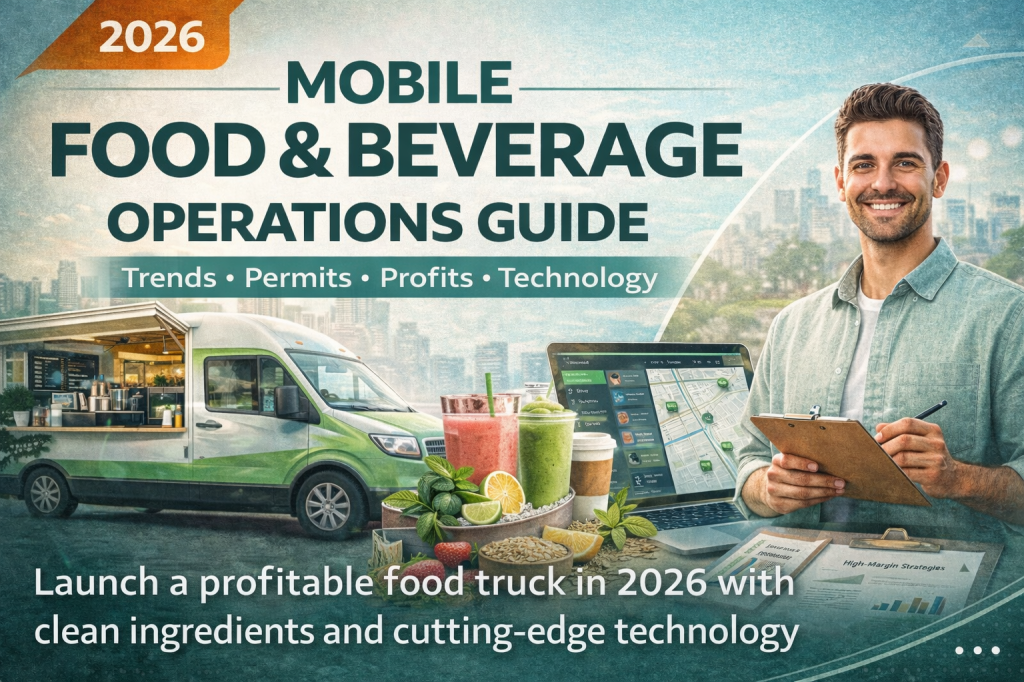
The 2026 mobile beverage industry is being shaped by two powerful forces: wellness-driven consumer demand and a growing culture of relaxed sociability. Together, these trends are redefining how entrepreneurs design menus, price products, and structure startup investments. Research and operator case studies increasingly show that profitability is no longer driven only by volume of sales but by strategic menu engineering, disciplined cost control, and regulatory preparedness.
This article synthesizes current Q&A research outputs into a cohesive operational framework for anyone planning to launch—or optimize—a beverage truck or mobile café in 2026.
1. Market Direction: Wellness Meets Social Experience
Consumer behavior data indicates a strong pivot toward beverages that provide functional benefits—energy support, digestive aid, mental clarity, or stress reduction—while still delivering a premium social experience. This shift has expanded demand for:
- Non-alcoholic craft drinks
- Specialty coffees and teas
- Adaptogen-infused mocktails
- Visually distinctive beverages for social media sharing
The implication for operators is clear: value perception is increasingly linked to health alignment and presentation quality, not just portion size or alcohol content.
2. High-Margin Menu Engineering as a Profit Engine
2.1 Functional & Non-Alcoholic Beverages
Non-alcoholic craft beverages are emerging as the highest-margin segment in the industry. Research projections suggest contribution margins exceeding 80% for mocktails due to the absence of expensive spirits and the ability to maintain premium pricing through branding and aesthetics.
Key profit levers include:
- House-made syrups and purées to lower ingredient costs
- Adaptogens and nootropics (e.g., ashwagandha, lion’s mane) for perceived wellness value
- Mini-pours and tasting flights, which increase price-per-ounce profitability while encouraging multiple orders
2.2 Coffee and Specialty Drinks
Coffee trucks traditionally operate with 60–70% gross profit margins, but the 2026 strategy shifts away from raising base prices toward increasing Average Order Value (AOV) through add-ons:
- Alternative milks
- Functional toppings (mushroom powders, collagen foam)
- Trending flavor infusions such as matcha, yuzu, and brown sugar
Upselling from a standard drink to a signature specialty beverage can raise ticket size without significant increases in labor or fixed overhead.
3. Mathematical Cost Control: The Foundation of Sustainability
A profitable menu is not creative guesswork—it is quantitatively engineered. The most widely referenced pricing discipline in 2026 operations is the 4× Multiplier Rule, which targets a 25% Cost of Goods Sold (COGS). For instance, a drink costing $1.50 in total inputs should retail near $6.00.
Critical research findings emphasize:
- Tracking “phantom costs” such as ice, garnishes, napkins, and disposables
- Cross-utilizing ingredients across multiple menu items to reduce spoilage
- Inventory visibility systems to prevent revenue leakage
Operators who neglect hidden consumables often experience inflated ingredient ratios that can exceed total sales revenue—a common failure point in early-stage ventures.

4. Food Menu Simplification and Nostalgia Positioning
While beverages drive margins, complementary food offerings remain valuable when executed with simplicity. Industry data suggests that limiting menus to 6–10 items reduces waste, speeds preparation, and lowers labor costs.
The most successful food concepts align with the “elevated comfort” movement—familiar dishes enhanced with premium branding or cross-cultural fusion. Examples include gourmet grilled cheese or fusion tacos using low-cost staple ingredients but commanding higher price points through presentation and storytelling.
5. Visual Value as a Revenue Multiplier
In the 2026 landscape, visual appeal is no longer optional marketing—it is a direct economic driver. Research indicates that customers increasingly equate clarity of ice, vibrant natural colors, and distinctive glassware with product quality. High-quality presentation supports premium pricing and generates organic digital promotion through social media sharing.
6. Startup Capital Requirements: Budget to Premium Builds
Launching a mobile beverage truck requires significant upfront capital. Aggregated industry estimates place startup investment between $43,000 and $311,000+, depending on vehicle condition, equipment sophistication, and regional compliance costs.
Primary expenditure categories include:
- Vehicle acquisition—the largest single expense, with used trucks offering lower initial outlay but potential repair risks.
- —scalingKitchen and brewing equipment – scaling with menu complexity.
- Technology stack and POS systems—essential for transaction efficiency and inventory tracking.
- Permits and legal fees are highly location-dependent.
- Initial inventory and working capital—a recommended six-month buffer to mitigate slow periods.
7. Regulatory and Licensing Complexity
Regulatory compliance remains one of the most fragmented aspects of mobile beverage entrepreneurship. Requirements often span federal, state, and municipal jurisdictions, creating variability in cost and timeline.
Core Compliance Areas
Business Foundations
- Employer Identification Number (EIN)
- General business license
- Commercial vehicle registration and insurance
Food and Health Oversight
- Mobile food facility permit
- Food handler or manager certification
- Commissary kitchen agreements (with some 2026 exemptions for low-risk units)
Beverage-Specific Licenses
- Liquor licenses for alcoholic service
- Mobile vendor permits for public or private property vending
Safety Approvals
- Fire marshal permits for propane or open-flame equipment
- Electrical and plumbing inspections where mandated
Research highlights extreme regional cost differences, with some metropolitan permit structures exceeding tens of thousands of dollars while smaller jurisdictions may charge only a few hundred. Strategic location selection can therefore significantly influence startup feasibility.
8. Strategic Synthesis: Research-Backed Success Factors
The integrated research output suggests that successful 2026 beverage entrepreneurs converge on five core principles:
- Prioritize high-margin functional beverages.
- Engineer menus using precise COGS calculations.
- Simplify operations to reduce waste and labor.
- Invest in visual presentation to amplify perceived value.
- Plan regulatory compliance and capital buffers early.
Conclusion
The 2026 mobile beverage market rewards operators who combine data-driven pricing, wellness-aligned innovation, and regulatory foresight. Profitability is less about expanding menus or chasing trends blindly and more about disciplined execution and strategic alignment with consumer psychology. Businesses that treat menu design as financial engineering and licensing as a strategic investment—rather than administrative afterthoughts—are positioned to achieve sustainable margins and long-term resilience in an increasingly competitive landscape.
If you’re serious about turning these strategies into real income, you can fast-track your progress with my step-by-step digital resource designed specifically for beginners and small mobile business owners. This guide breaks down menu pricing formulas, startup budgeting sheets, licensing checklists, and ready-to-use templates so you don’t have to figure everything out from scratch. Instead of spending months researching, you can follow a clear roadmap that helps you launch smarter, avoid costly mistakes, and start generating profit faster. It’s a practical companion to this article for anyone who wants structured direction rather than trial-and-error.
Access it here: https://payhip.com/b/KNup0






Leave a comment