
Introduction: The Hidden World of Your Online Cart
A few taps on a screen unleash a logistical ballet millions of Indians now take for granted. Within hours, or sometimes minutes, a package arrives, making everything from groceries to gadgets instantly accessible. We’ve come to expect this seamless efficiency as the new standard of modern commerce.
But behind the simple “Buy Now” button lies a world of fascinating paradoxes. It’s a world where cutting-edge logistics coexist with a deep-seated preference for physical touch, and where the future may lie not in replacing the old, but in empowering it. The journey of your order is powered by a uniquely Indian ecosystem of high-tech wizardry, surprising consumer habits, and innovative business models.
This article pulls back the curtain to reveal five of the most surprising truths about the e-commerce and delivery network that brings your online cart to life.
——————————————————————————–
1. Despite the Hype, Most People Still Prefer Shopping in Person
In an age dominated by digital storefronts, the prevailing narrative is one of online retail’s inevitable triumph. Counter-intuitively, however, recent data suggests the allure of the physical storefront persists, even in the heart of metropolitan India.
A 2021 study of 104 consumers in Mumbai revealed that a significant 61.5% still prefer offline shopping for the satisfaction it provides, compared to just 38.5% who favor online. The primary reason is deeply human: a desire for a sensory connection with products. According to the study’s conclusion, consumers are not keen to shift entirely online because the ability to “touch, trail, and feel” the product is what they desire most.
While this small-scale survey in a single metropolis isn’t nationally representative, it highlights a crucial point: even in India’s most cosmopolitan cities, the sensory appeal of physical retail remains a powerful force that e-commerce has yet to fully replicate. This enduring trust in the physical and local is not just a challenge for pure-play e-commerce; it’s the very foundation an entirely different model is being built upon.
——————————————————————————–
2. Amazon’s “Time-Traveling” Packages Aren’t Magic—They’re Just Clever Logistics
If you’ve ever received an Amazon package before you even got the “shipped” notification, you’ve experienced the “time-traveling” phenomenon that mystifies customers online. The explanation, however, is less about breaking the laws of physics and more about a combination of hyper-efficient logistics and digital lag.
An Amazon seller on a Reddit forum demystified the process. Here’s how it works:
- Products listed as “Fulfilled by Amazon” (FBA) are already stored in an Amazon warehouse, often close to major transit hubs.
- When an order is placed, the package is dispatched from one warehouse to another near the customer’s airport, frequently traveling by air.
- The “time travel” effect is often a simple case of physical reality outpacing the digital record-keeping. The package is physically moving—and may even be delivered—before Amazon’s servers, especially during high-volume periods, update the order status to “shipped.”
Adding to the intrigue is the theory of predictive shipping. As one user suggested, the process might be even more proactive: “Amazon predicts what a user is likely going to buy next and ships it to the nearest warehouse even before the order has been placed.”
——————————————————————————–
3. Your 10-Minute Grocery Delivery Comes From a “Dark Store” You’ll Never Visit
The incredible speed of quick commerce—delivering essentials in under 30 minutes—is powered by a hidden network of “dark stores.” These aren’t retail locations you can browse; they are the high-tech urban solution to the challenge of getting products closer to the customer.
A dark store is a compact, local fulfillment center or micro-warehouse, strategically placed in a dense urban neighborhood. Its entire purpose is to fulfill online orders at lightning speed. Unlike a traditional supermarket designed for customer experience, a dark store is engineered for pure picking and packing efficiency. This model stands in stark contrast to the large, centralized warehouses used by traditional e-commerce players.
| Feature | Dark Store Fulfillment | Traditional Warehouse Fulfillment |
| Location | Urban, hyper-local | Centralized, regional/national |
| Size | Compact | Large, substantial capacity |
| Product Range | Limited, fast-moving items | Wide range of SKUs |
| Delivery Speed | Extremely time-sensitive, with SLAs often measured in hours, if not minutes | More flexibility, longer transit |
This hyper-local model is what enables quick commerce platforms to meet the demand for unplanned, emergency purchases, turning a sudden craving or a forgotten ingredient into an item at your door in minutes.
——————————————————————————–
4. Why the Global “Amazon Model” Might Not Be the Future for All of India
While dark stores represent a high-tech solution to urban delivery, an alternative, asset-light model is proving to be a powerful contender, especially in India’s Tier 2 and 3 cities. The provocative idea here is that the standard global e-commerce model, defined by centralized mega-warehouses, may not be the ultimate answer for the unique fabric of Indian retail.
Sumit Singh, founder of the hyperlocal startup Store Hi, this captures this sentiment perfectly:
“The Amazon model of e-commerce is not sufficient for India. We have a very high density of offline stores, that is, 7 stores per 1000 people, along with a very low distance to travel to buy products.”
Instead of trying to replace India’s vast network of local kirana stores, this emerging “Kirana-tech” model partners with them. Startups are empowering these neighborhood shops with digital tools for inventory management, marketing, and logistics. This approach leverages the country’s unique, high-density retail ecosystem. For consumers in smaller cities, it solves a major pain point: replacing the 2-3 day delivery times from traditional e-commerce with a rapid 2-hour delivery service fulfilled by a trusted local merchant.
——————————————————————————–
5. The Unseen Economics of Your Instant Delivery
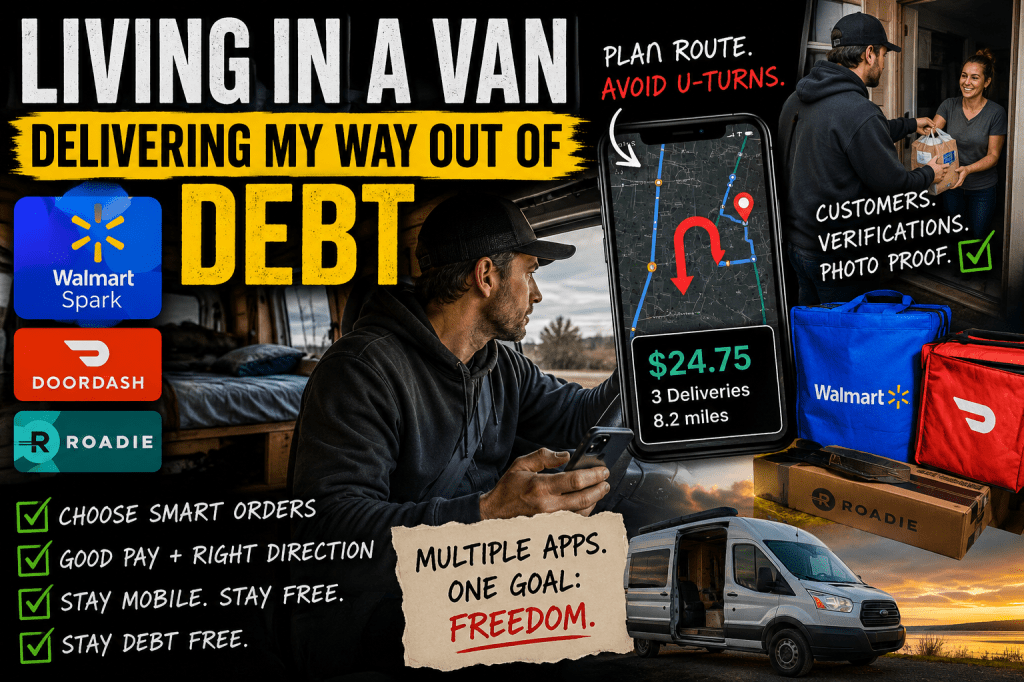
The convenience of hyperlocal delivery is powered by a massive workforce of gig economy delivery partners. However, the economic reality for these individuals reveals the challenging trade-offs behind the instant-gratification model.
A study on hyperlocal food delivery in Kolkata found that the prevailing system often leads to a large fleet of partners competing for orders, resulting in a lower number of deliveries per person and, consequently, poor per capita partner earnings.
The research highlights a critical economic imbalance. While a delivery partner is paid by the aggregator based on the miles traveled for an order, they personally bear the actual fuel and vehicle costs. Furthermore, the model frequently requires them to move between high-demand areas to find their next job, a process the study notes means they are “forced to relocate on their own, consuming miles for which they are not paid.” This reveals a hidden trade-off: the remarkable convenience enjoyed by the consumer is often subsidized by the economic precarity of the delivery workforce.
——————————————————————————–
Conclusion: A More Complex Cart
From the surprising persistence of physical stores to the logistical acrobatics behind supersonic speeds, the world of Indian e-commerce is a tapestry of innovation, tradition, and complex trade-offs. The rise of localized kirana-tech models and the high-tech efficiency of dark stores show two parallel paths to solving the same puzzle of proximity. Yet, underpinning this entire quest for speed is the human economics of the gig worker, whose reality is the hidden cost of our demand for instant delivery.
So, the next time you click ‘buy,’ will you see it as a simple transaction or as your part in a complex and rapidly evolving story of technology, tradition, and trade-offs?






Leave a comment