Introduction: The Magic and the Mystery of Instant Commerce
The modern consumer experience feels like magic. With a few taps, groceries, meals, or essentials appear at your door in under 30 minutes. This instant commerce, born in the hyper-competitive Indian retail market, is rapidly becoming a baseline expectation for urban life. But the story behind this magic is a high-stakes battle defined by a core conflict: the collision between customer expectation for speed, the financial reality of staggering losses, and the intense competitive pressure of a looming price war.
The truth behind your 10-minute delivery is a complex narrative of disruptive strategy, hidden infrastructure, and unsustainable economics playing out in one of the world’s most dynamic retail environments—a landscape where traditional Kirana stores are now part of the digital battleground. The real story is more surprising than you think.
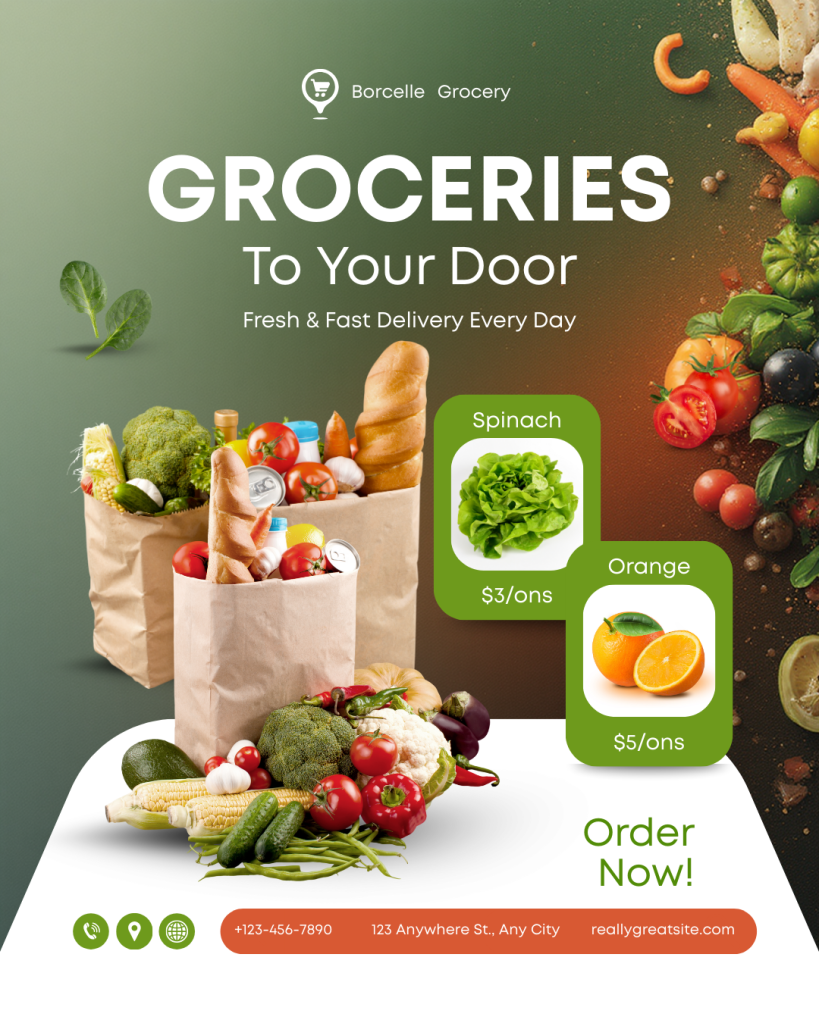
If you run a grocery store, online food delivery service, or local supermarket, visuals matter more than ever. This professionally designed Grocery Delivery Canva Template helps you promote fresh produce, highlight prices, and drive instant orders without hiring a designer. Fully editable and reusable, it lets you update offers in minutes and post across Instagram, WhatsApp, Facebook, or ads effortlessly. You can get instant access to the template here: https://payhip.com/b/yvEqx — a simple upgrade that makes your grocery brand look modern, trustworthy, and conversion-ready.
1. Explosive Growth, Massive Losses: The Profit Paradox
The central paradox of quick commerce is as simple as it is alarming: astronomical revenue growth is fueling equally astronomical financial losses. It’s a surprising truth because in nearly every other sector, this level of top-line expansion would signal immense financial health. In quick commerce, it’s a sign of a deepening crisis.
This data points to an unsustainable trajectory. In the first quarter of fiscal year 2026, Blinkit reported a remarkable 155% year-on-year revenue growth to ₹2,400 crore, yet posted operating losses of ₹162 crore. Instamart’s story is even more stark: its revenue grew 113% to ₹859 crore, but operating losses widened to an incredible ₹896 crore—exceeding its total revenue. This isn’t a rounding error; it’s a structural vulnerability stemming from the immense costs of dark stores, last-mile delivery fleets, and hyper-local logistics. The strategic implication is clear: the very model built for speed is simultaneously engineered for massive cash burn.
2. The Giant’s Achilles’ Heel: Why Local Can Beat Global
In most retail contests, scale is the ultimate weapon. Yet in quick commerce, the sprawling distribution networks of giants like Amazon become a liability. The decisive factor isn’t the size of the network; it’s proximity to the customer.
This is where the competitive landscape inverts. Smaller, nimbler players can gain a decisive edge by deploying their tactical weapons: a dense network of micro-fulfillment centers (MFCs) and “dark stores.” By strategically placing these small-footprint warehouses just kilometers from their customer base, they can bypass the city-spanning logistics that slow down larger competitors. Their advantage is built on dominating the final, most critical stage of delivery.
“Amazon’s sprawling network becomes a liability when you’re competing on the last three miles.”
This dynamic flips the typical “David vs. Goliath” narrative. When the race is measured in minutes, not days, being small, dense, and hyper-local is the core competitive advantage, rendering a global giant’s scale irrelevant in the final sprint to the doorstep.
3. The Secret Infrastructure: Your Order Comes From a “Dark Store”
That 10-minute delivery doesn’t originate from a local supermarket or a massive warehouse. It comes from a purpose-built facility known as a “dark store” or a “micro-fulfillment center” (MFC). “These are retail-like spaces, hidden in plain sight in dense urban neighborhoods, that customers never enter.
The surprise isn’t just that these facilities exist, but that a parallel, invisible retail ecosystem has been built under our noses, optimized for algorithms, not people. Inside, every aisle and shelf is engineered for one purpose: speed. Products are arranged by order frequency and pick-path efficiency, not by traditional category, allowing workers to fulfill orders with machine-like precision. This hidden infrastructure is the essential backbone that makes ultra-fast delivery possible, revealing that a seemingly simple transaction is powered by a complex, dedicated logistics network operating just beneath the surface of our cities.
4. The Steep Environmental Cost of Instant Gratification
The convenience of quick commerce comes with a significant and often overlooked environmental price tag. The very last-mile delivery (LMD) logistics that make the model possible are also a major contributor to urban pollution.
In some urban studies, such as one conducted in Thailand, LMD has been shown to account for approximately 20% to 30% of a city’s total CO₂ emissions from e-commerce deliveries. The relentless focus on speed leads to more frequent, smaller delivery trips, increasing vehicle emissions and traffic congestion. This is compounded by a surge in single-use plastic packaging for individual orders. This environmental toll is the direct consequence of the same hyper-optimized, high-frequency logistics that drive up operating costs, creating a dual challenge where the push for speed is simultaneously burning cash and carbon.
5. The Real War Isn’t About Speed—It’s About Price
While quick commerce was built on the promise of speed, the industry’s defining battle is shifting from customer adoption to financial survival. The entry of deep-pocketed players like Amazon fundamentally alters the competitive landscape, threatening to ignite a brutal price war.
Reports indicate Amazon is willing to price products 15–20% cheaper than incumbents. This signals a critical threat. After years of using discounts to acquire customers, platforms like Blinkit and Instamart were attempting to raise prices and improve their disastrous unit economics. Now, they must contend with a global giant employing a loss-leader strategy to seize market share. The strategic implication is that the ultimate winner may not be the fastest platform but the one with the financial endurance to survive a punishing war of attrition over pricing.
——————————————————————————–
Conclusion: The True Price of Instant
The 10-minute delivery is the endpoint of a business model far more complex, costly, and consequential than it appears. It is built on a paradox of profitless growth, a secret infrastructure of dark stores, and a significant environmental toll—all unfolding within India’s unique and challenging retail ecosystem. Now, a brewing price war threatens to push its already fragile financial structure to the breaking point.
The 10-minute promise has been met, but it has triggered a war fought with venture capital and carbon emissions. The ultimate question is not who can deliver the fastest, but who can withstand the highest cost—and whether consumers are willing to pay the true price for an instant that is anything but free.




Leave a comment