1. Introduction: AI is More Than Just Robots and Sci-Fi

When we hear the term “artificial intelligence,” our minds often jump to scenes from science fiction—thinking robots, futuristic cities, and complex digital minds. While those ideas are fascinating, the reality of AI in today’s business world is both more practical and, in many ways, more profound.
In a business context, AI is a powerful tool that helps companies work smarter. Think of it as a set of technologies that can automate tasks, detect patterns in huge amounts of information, extract valuable insights from data, and help people make better decisions. By harnessing this power, businesses can solve stubborn problems, operate more efficiently, and gain a “competitive edge” in their industries.
This article will move beyond the hype to show you how AI is already at work in the real world. We’ll explore clear, tangible examples of how companies in finance, healthcare, recruitment, and marketing are using AI to transform their operations and create new value. Using AI is becoming less about complex coding and more like talking to a very smart assistant that’s ready to help.
2. The Secret Sauce: How We “Talk” to AI
So, how do people actually get AI to perform these amazing tasks? The magic happens through a ‘prompt’—a set of instructions or a question that we give to an AI model. However, getting a great result isn’t as simple as asking a basic question.
One of the best ways to think of an AI model is as a “brilliant intern.” It has access to a vast amount of information but needs clear, strategic directions to produce high-quality work. To provide that direction, we can use a simple but powerful framework called RIGS: Role, Instruction, Guardrails, and Specifics. A great prompt tells the AI its role (“Act as an expert marketer”), gives a clear instruction (“Write three headlines”), sets guardrails (like tone or length), and provides crucial specifics (context about the product and audience).
This leads us to the powerful technique of “persona-driven prompting.” Instead of just telling the AI what to do, you first tell it who to be. By asking the AI to “Act As” a specific expert, you give it a role and context that frames the conversation and unlocks a higher quality of output.
Here are a few examples of how this works in practice:
"Act as our company's knowledgeable Social Media Manager and write a caption...""Adopt the tone of our Chief Innovation Officer and write a paragraph on the future of our industry.""Act as our senior accountant. Write a LinkedIn post introducing our new tax planning service for small business owners."
The key takeaway is simple: the quality of what you get from an AI depends entirely on the quality of the instructions you give it. Now that we understand the power of giving AI a specific persona, let’s see how companies are using this very technique to create specialized assistants for everything from managing finances to finding jobs.

3. AI in Action: Real Companies, Real Transformations
We will now explore specific case studies of businesses using AI in innovative ways to solve real-world problems. Each example highlights how a company turned a challenge into an opportunity by putting a specialized AI to work.
3.1. How Can AI Make Personal Finance Engaging?
To tackle the tedious challenge of budget management for millennials, Mudra developed an AI-driven app that transforms the process into an enjoyable experience. Its solution is an intelligent chatbot, built on Google’s Dialogflow, that analyzes spending data and turns budgeting into an exciting, conversational journey. With its playful interface and personalized insights, Mudra makes financial wellness feel less like a chore and more like a conversation with a helpful guide.
3.2. From Months to Days: Finding Jobs with AI
Recognizing that the hiring process for blue-collar workers was often slow and inefficient, JobGet created a recruitment app to connect job seekers with employers in days, not months. Its standout feature is AI-enhanced location matching, which intelligently connects people with nearby job openings. This transformative approach dramatically sped up the hiring timeline, helping JobGet secure $52 million in funding and place over 150,000 people in jobs.
3.3. How AI is Redefining Our Daily Interactions
To help people stay connected while on the move, Vyrb developed an app that allows users to navigate social media using only voice commands on Bluetooth wearables. This provides a seamless, hands-free experience, making social media more accessible during activities like driving or exercising, an innovation that helped the company secure more than $1 million in funding. Similarly, TOOTLE uses generative AI to create a conversational navigation assistant. By connecting to real-time data from sources like Google Places, it provides spoken answers to questions about weather or nearby points of interest, making information retrieval effortless.
3.4. A Healthier Future: AI’s Role in Healthcare
AI is also making significant strides in healthcare, where precision and accessibility are critical.
- AI-Assisted Surgery: By integrating AI with surgical tools, surgeons can access real-time data analysis during procedures. This enhances their precision, leading to more accurate operations and better patient outcomes.
- Virtual Health Assistants: These AI-powered assistants offer personalized support to patients by managing appointments and answering common questions, making healthcare services more accessible and helping patients manage their care effectively.
These examples show how AI is driving large-scale transformations in major industries. Now, let’s zoom in to see how AI is becoming an indispensable teammate for accomplishing day-to-day tasks.
4. A Day in the Life: AI as a Business Teammate
Beyond industry-wide disruption, AI is changing the daily work of professionals everywhere. The same persona-driven prompting techniques we just learned are empowering people in departments like marketing and sales to become more efficient and creative partners in their organizations.
4.1. Powering Marketing and Creativity
Marketing teams are using AI for everything from brainstorming big-picture strategies to writing the perfect social media post. By providing a clear prompt, marketers can quickly generate high-quality content, overcome creative blocks, and save valuable time.
| Task | Example AI Prompt | Primary Benefit |
| Sparking New Ideas | "Generate 10 blog post ideas for a [industry] business." | Overcomes writer’s block and quickly generates relevant topics. |
| Engaging on Social Media | "Create 5 engaging Instagram captions for a [type of business]." | Saves time and helps create consistent, on-brand social media content. |
| Writing Effective Ads | "Write a high-converting Facebook ad copy for [offer]." | Helps craft persuasive ad copy designed to improve campaign results. |
4.2. Sharpening the Sales Pitch
For sales teams, preparation and communication are everything. AI has become a powerful tool for helping reps prepare for meetings, write effective outreach, and keep deals moving forward.
- Writing Outreach Emails: AI can draft personalized cold outreach emails, helping reps connect with potential clients in a more relevant and less generic way.
- Preparing for Objections: Sales reps can use AI to prepare for the top 3-5 objections they face, allowing them to walk into meetings with more confidence.
- Planning Follow-ups: AI can create a multi-touch follow-up plan to maintain momentum after a proposal without being pushy, helping to prevent deals from stalling.
From big strategic shifts in entire industries to small but powerful daily tasks, AI has proven itself to be an incredibly versatile tool.
5. Conclusion: A Tool for Everyone
As we’ve seen, artificial intelligence is not a far-off, futuristic concept. It is a practical and powerful tool that is already delivering real value across countless business sectors—from making personal finance more engaging to helping surgeons perform with greater precision.
The most effective way to think about AI is as a “co-pilot.” It is not here to replace human expertise but to enhance it. AI handles the repetitive tasks, analyzes the complex data, and provides the creative spark, freeing up people to focus on strategy, empathy, and innovation—the things humans do best.
For students and newcomers preparing for their future careers, learning to “talk” to AI is more than just a valuable skill; it’s a new form of literacy for the modern workplace. By mastering how to give clear, strategic instructions, you are equipping yourself not just to use the tools of today, but to build and innovate with the technologies of tomorrow.
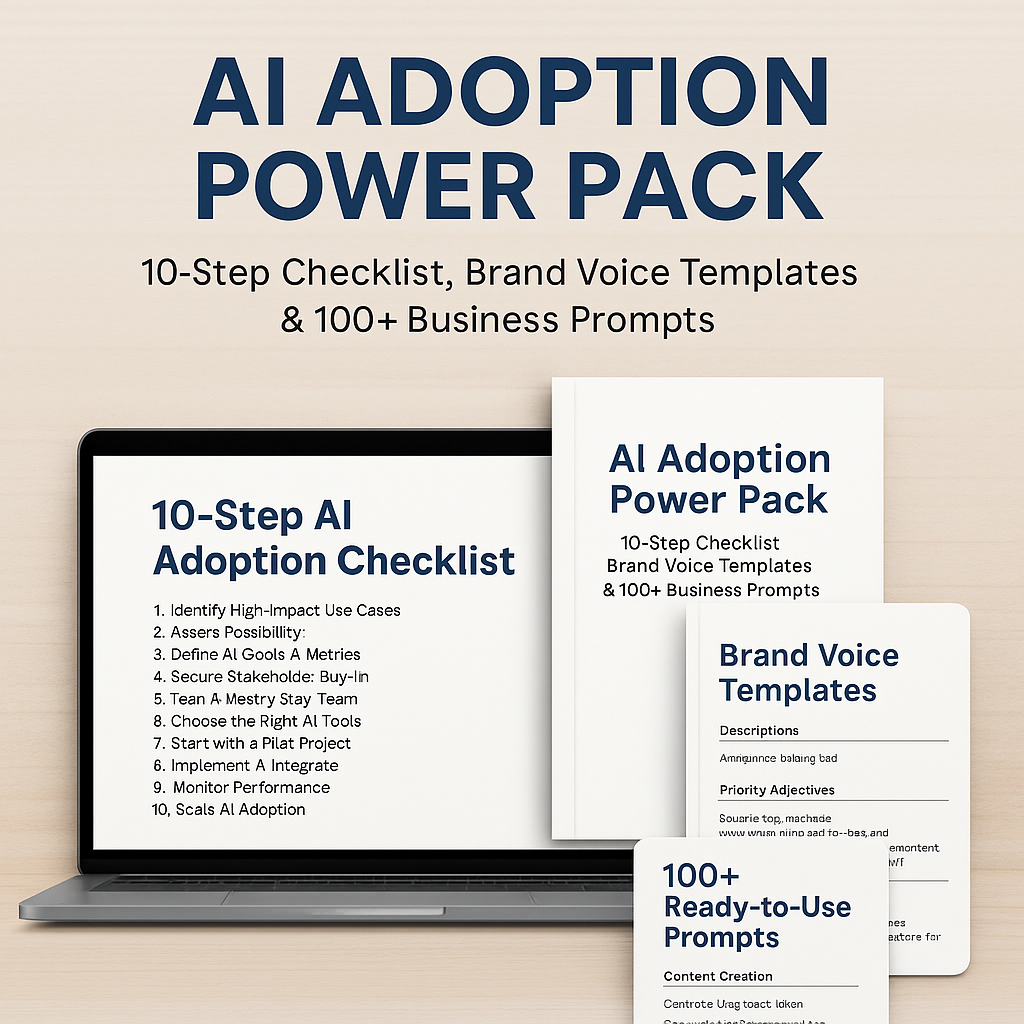
🚀 Everyone’s talking about AI, but few are actually using it right. The truth? Businesses that master AI workflows today will outpace competitors tomorrow. That’s why I’ve been using the AI Adoption Power Pack—a complete system with a 10-step checklist, brand voice templates, and 100+ ready-to-use prompts that turn confusion into clarity. If you’re serious about scaling smarter and saving time, grab your copy here 👉 https://payhip.com/b/vFAlx and start using AI like a pro—not a beginner.












Leave a comment