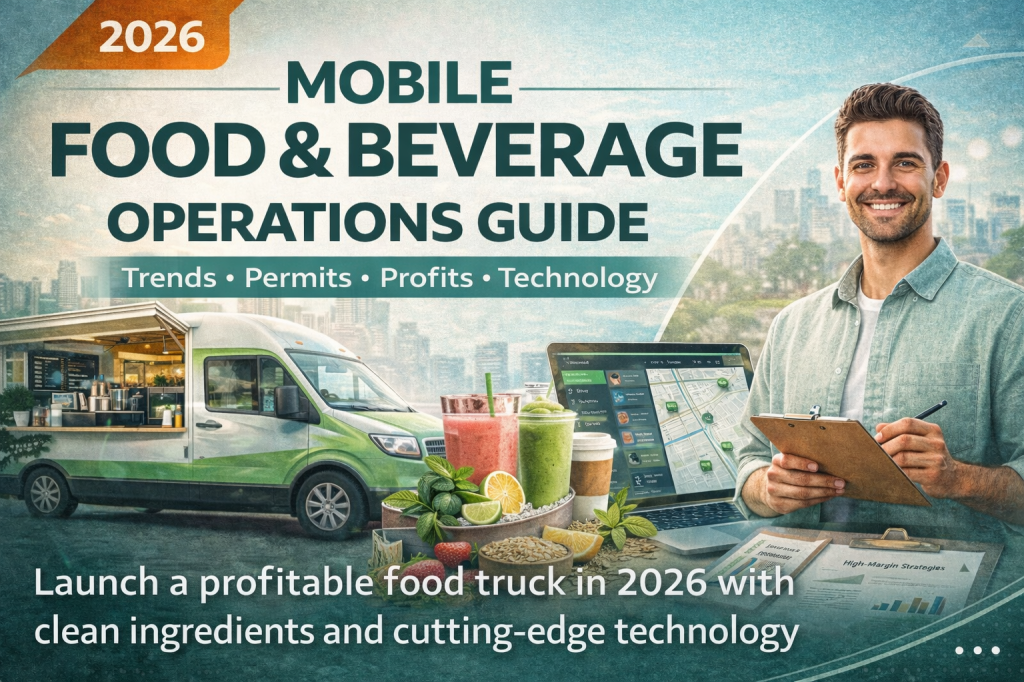
The image of the food truck is shedding its skin. For years, the “curbside kitchen” was defined by the clatter of deep fryers and the rapid-fire assembly of tacos and burgers. But in 2022, a tectonic shift has occurred. As the “Food Truck Freeks” movement highlights, we are witnessing a transition toward “something new”—a frontier where mobile units aren’t just selling snacks but are instead operating as highly specialized, artisanal laboratories. This isn’t just about convenience; it’s a creative revolution on wheels.
1. The Food Truck as a Mobile Classroom
At the Terra Madre global festival in Turin, Italy, the traditional food truck has been reimagined as a “mobile classroom.” This isn’t merely a kitchen with a service window; it is a fully functioning bakery and educational hub. By bringing the entire production process—from the mixing of the flour to the firing of the oven—directly to the public, these entrepreneurs are solving the “transparency deficit” inherent in industrial food systems.
This model is a brilliant strategic move for the modern era. When consumers watch the artisan work, the product is instantly de-commoditized. It’s no longer just a loaf of bread; it is a demonstration of skill and heritage. This level of engagement builds a depth of brand trust that a stationary storefront often struggles to achieve, transforming a simple transaction into a profound community experience. As the team at Terra Madre notes:
“This space celebrates sustainable and traditional food practices, focusing on preserving artisanal bread-making and promoting sustainability.”
2. Scaling Up (Literally) with the 5-Kilo Loaf
In the mobile world, “small” is usually the default. However, the bakers of the Panificatori Agricoli Urbani (Urban Agricultural Bakers) are subverting this by scaling up to an extreme. They aren’t just baking bread; they are producing massive 5-kilogram loaves. They playfully refer to these as “Pane-toni”—a clever linguistic nod that blends pane (bread) with the suffix for “big,” while winking at the famous Italian Panettone cake.
From a business strategy perspective, these massive loaves are high-octane marketing. The “theater” of a baker hauling a 5 kg loaf out of a truck creates an immediate, irresistible “wow factor” that lowers customer acquisition costs through pure word-of-mouth gravity. At Terra Madre, the demand was so intense that fresh batches often didn’t last more than three minutes before selling out. This visual spectacle proves that a mobile setting doesn’t require a compromise on the ambition or physical scale of the product.
3. The Power of “Living” Ingredients
The philosophy driving these ambitious mobile units is rooted in the “living” nature of the product. For the Italian bakers, sourdough isn’t a static recipe; it’s a living, breathing tenant of the truck. They embrace the “Vintage of the Grain,” a concept that treats flour with the same reverence as wine. While commodity flour is blended for a boring, predictable consistency, these artisans celebrate the variance—acknowledging that different harvests and different farms will yield a dough that changes every single day.
This focus on variance is a powerful differentiator. In a world of sterile, mass-produced food, the modern consumer craves the “authentic” and the “unrepeatable.” When asked why he dedicated his life to this craft, one baker’s answer was as simple as it was profound:
“What do you love about making bread? Because it is alive.”
4. Hyper-Localism and Protected Varieties
The most successful mobile entrepreneurs use their trucks as cultural ambassadors. A standout example is the use of the Cipolla di Giarratana—the “Piatta” (flat) onion from Sicily. These are not your average aromatics; they are massive, sweet, Slow Food-protected varieties that can weigh up to a kilogram each.
The scent wafting from the truck—a heady mix of oregano, chili, olive oil, and slow-roasted sweetness—serves as a sensory siren call. By incorporating these specific, protected ingredients into their dough, the bakers create a product that is geographically tethered to a specific heritage. In a crowded market, this hyper-localism offers a story that a generic food truck cannot tell. It isn’t just a sandwich; it’s a portable piece of Sicilian history.
5. The “Politically Strong Message” of Mobile Food
Beyond the bread, there is a movement. The Panificatori Agricoli Urbani (PAW) movement uses the mobile bakery to send what coordinator Luca calls a “politically strong message” to delegates and citizens alike. This isn’t just about profit; it’s about a “bread revolution.”
The strategy here is rooted in community-funded resilience. Take, for instance, the cooperative bakery in San Leo, where 60 people banded together to restart the local bakery as a cooperative. By using a mobile truck to bring this cooperative’s organic focaccia to global events like Terra Madre, they are proving that food trucks can act as vehicles for social advocacy. It demonstrates that a sustainable food system isn’t just a dream—it’s a mobile reality that can be owned and operated by the people it feeds.
Conclusion: The Future of the Mobile Frontier
We are moving from the era of “fast food” to the era of “deep food.” The most ambitious food trucks of today are no longer just convenience points; they are cultural ambassadors prioritizing craft, sustainability, and community over high-volume turnover. Whether through a 5 kg “Pane-toni” or the preservation of a rare onion, the mobile kitchen has become a potent tool for artisanal expression and political change.
As we look to the future of the industry, one must wonder about the untapped potential of our own heritage. If you could put a tradition on wheels and take it to the world, what would it be?
If you’re serious about turning these strategies into real income, you can fast-track your progress with my step-by-step digital resource designed specifically for beginners and small mobile business owners. This guide breaks down menu pricing formulas, startup budgeting sheets, licensing checklists, and ready-to-use templates so you don’t have to figure everything out from scratch. Instead of spending months researching, you can follow a clear roadmap that helps you launch smarter, avoid costly mistakes, and start generating profit faster. It works as a practical companion to this article for anyone who prefers structured direction over trial-and-error.
Access it here: https://payhip.com/b/KNup0



Leave a comment