We have all been there. You see a stunning outfit online—effortless, chic, and perfectly balanced. You buy the exact pieces, rush to the mirror to recreate the look, and then… total defeat. The reflection looking back at you doesn’t match the image in your head, and your first instinct is likely to point the finger inward. You blame your body for being “difficult,” “wrong,” or “mismatched.”
I want you to take a deep breath and realize something transformative: You are not the problem.
That disappointment isn’t a failure of your physique; it’s the result of dressing for someone else’s silhouette. My own lightbulb moment came when I realized that clothes are simply tools designed for specific tasks. If a garment doesn’t look right, it isn’t a judgment of your worth—it’s just the wrong tool for your unique architectural frame.
Your Body is Not the Problem—It’s the Tooling
As a wardrobe architect, I view clothing through the lens of functionality. You wouldn’t use a hammer to turn a screw, and you shouldn’t expect a garment cut for a specific geometric frame to perform the same way on a different one. When an outfit feels “off,” it is rarely a personal failing; it is a mismatch of tool to task.
“Clothes are designed for different body shapes, and certain clothes will instantly flatter you because they are the right tool for your shape. If a certain cut or shape doesn’t work for you, it doesn’t mean there is anything wrong with your body.”
Shifting your mindset to this “toolbox” approach removes the mental exhaustion of self-blame. There is an incredible sense of relief in realizing that a “bad” outfit is just a data point. It’s simply an indication that you need a different tool to support your structure.
The Science of “Visual Harmony”
Have you ever wondered why some people look high-end in a simple t-shirt and jeans? It isn’t about the price tag; it’s about geometry. Your brain is a sophisticated scanner constantly looking for specific patterns to create a sense of ease. “Looking right” is actually the brain recognizing four key elements:
- Visual Harmony: A sense of agreement between the garment and the wearer’s natural lines.
- Proportion: The relationship between the different parts of the outfit and the body.
- Symmetry: A balanced distribution of visual weight.
- Balance: An intentional alignment that feels grounded to the eye.
When you master these, style becomes accessible regardless of your budget. High-end style is simply the result of aligning your clothing with your body’s natural symmetry.
The 60-Second Mirror Method
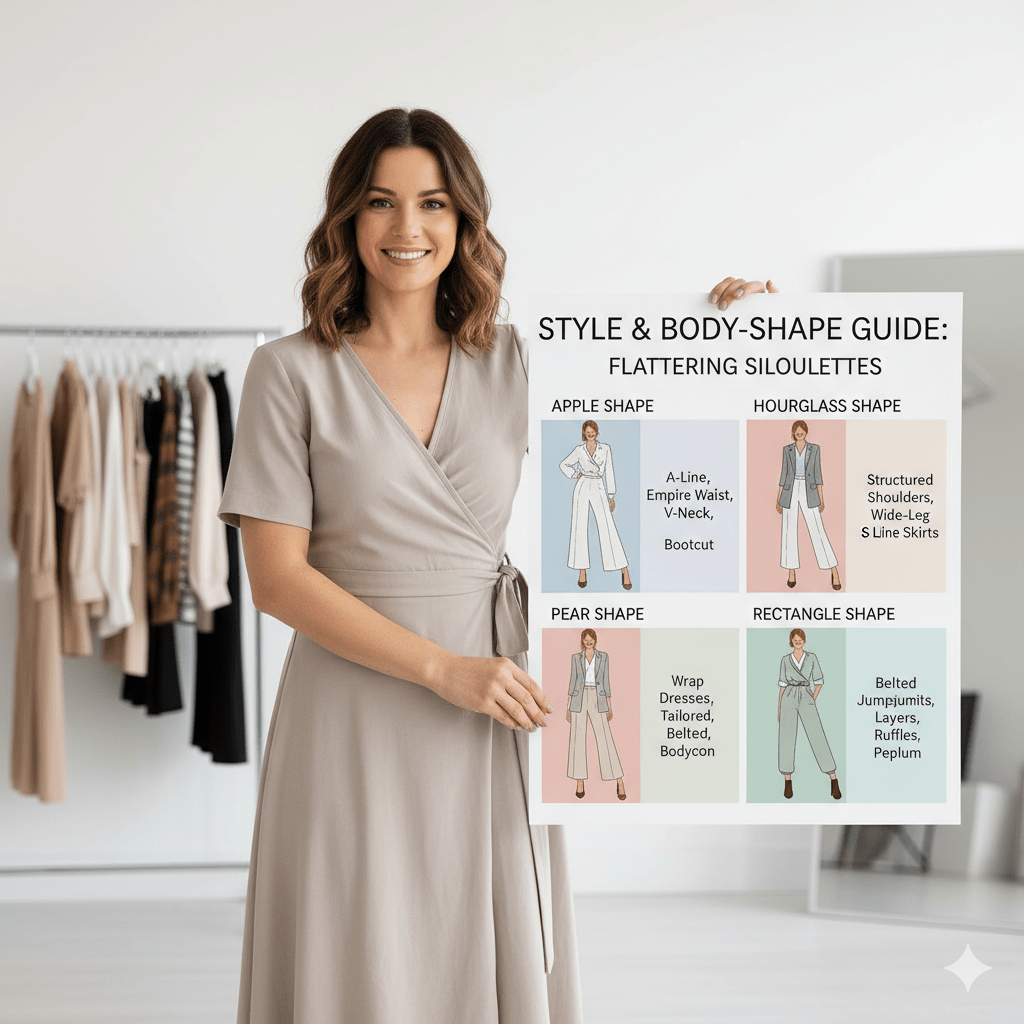
To select the right tools, you must first understand your “site plan.” To identify your starting point, stand in front of a full-length mirror in natural light wearing fitted clothing. Scan three specific areas: your shoulders, your waist, and your hips.
- Inverted Triangle: Your shoulders are noticeably wider than your hips. The Catch: This often shows up as having very narrow hips rather than just broad shoulders. (I actually fit into this category myself!)
- Pear: Your hips are noticeably wider than your shoulders.
- Hourglass: Your shoulders and hips are mostly balanced, featuring a clearly defined waist.
- Rectangle: Your shoulders and hips are balanced, but your waist is less defined.
- Apple: Your midsection is wider than both your shoulders and your hips.
Clarifying Questions for “Blended” Shapes: If you feel like a mix of shapes, ask yourself these two questions to find your “lead” shape:
- Where do my clothes typically feel tight first?
- What parts of my body are the hardest to fit when shopping? (For example, if you find it impossible to find pants that fit both your waist and hips, that is a major clue.)
Why “Size” is a Distraction from “Dimension”
In the world of wardrobe architecture, “size” is a secondary detail. The real secret lies in the difference between fit (how a garment adheres to the body) and proportion (how those items look when paired).
Your unique dimensions—the length of your limbs versus your trunk—dictate where hemlines should fall. For example, I have longer legs and a shorter torso. If I wear ultra-cropped tops that stop above my belly button, I risk shortening my torso even further and losing all visual balance. By choosing tops that stop at or just below the waistline, I create elongation and harmony.
“Your unique preferences can differ, and your shape can change over time, and that is perfectly normal… [Change] doesn’t keep you attached to a version of yourself that no longer serves you.”
The Three-Step Wardrobe Audit & The “Safety Pin” Hack
You don’t need to buy a whole new wardrobe; you just need to create clarity. Perform a mini wardrobe audit by picking one category (like tops), trying them on, and asking, “Does this achieve my goal and accentuate what I want to focus on?”
This process highlights “wardrobe gaps,” showing you exactly what tools you’re missing so you can stop making random trend purchases. For the items that almost work but need more definition, use the Safety Pin and Ribbon Hack:
- Turn the garment inside out and lay it flat.
- Place two safety pins on the inside seams at the waistline.
- Thread a piece of ribbon, a shoelace, or a soft tie through both pins.
- Tighten and tie the ribbon to create instant, custom waist definition.
Bonus Architectural Tools:
- The Jacket Bow: For jackets with built-in waist straps that feel boxy, tie the strap into a bow at the back to pull the silhouette in.
- Adding Volume: Use scarves and layering to add “bulk” to the shoulders (great for pears) or chunky belts and jacket straps to add flare to the hips (perfect for inverted triangles).
Reclaiming Your Power
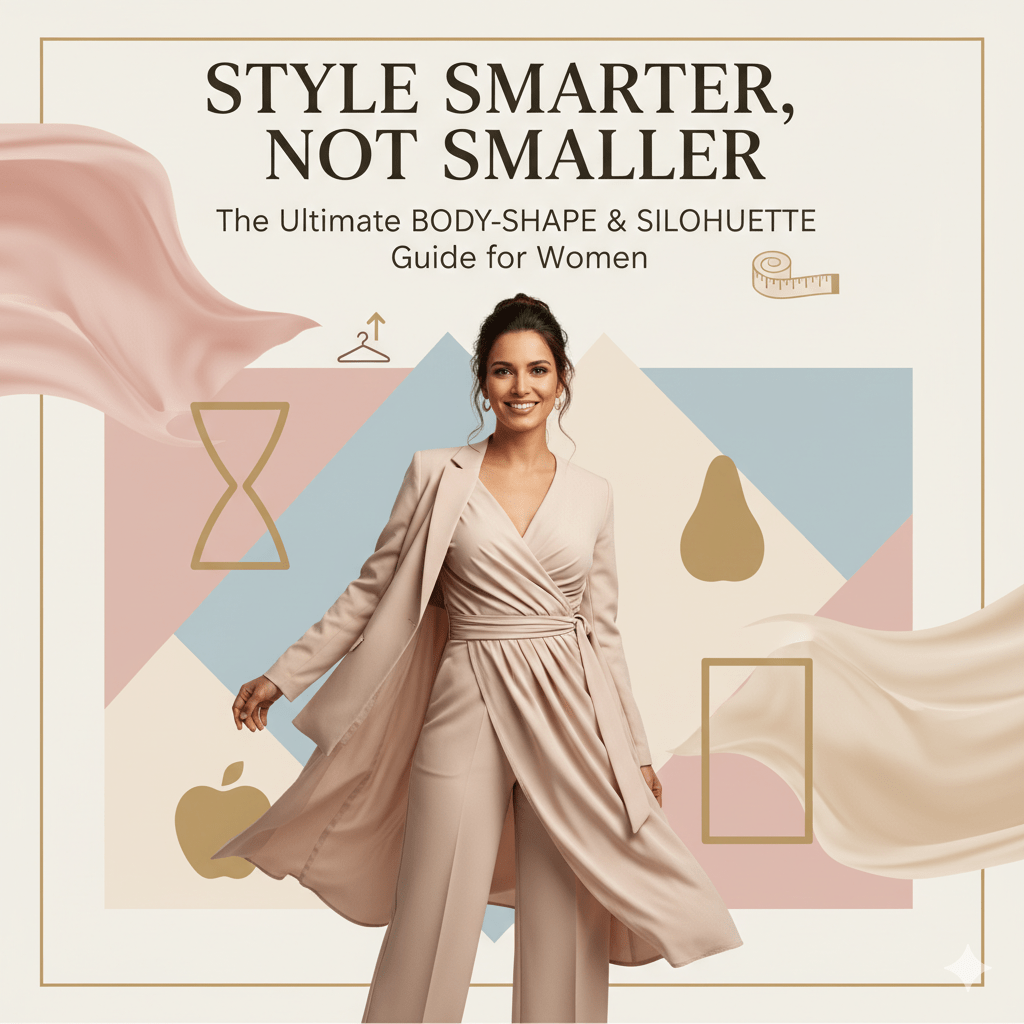
Style is not about changing your body to fit the trends of the day; it is about understanding your unique structure so you can choose the tools that serve you. When you stop fighting your natural silhouette and start working with your geometry, you reclaim the power to shape how you feel every single morning.
Your body is good enough exactly as it is today—hips, bits, dips, and all. If you stopped blaming your body today, what would you finally feel brave enough to wear tomorrow?



Leave a comment