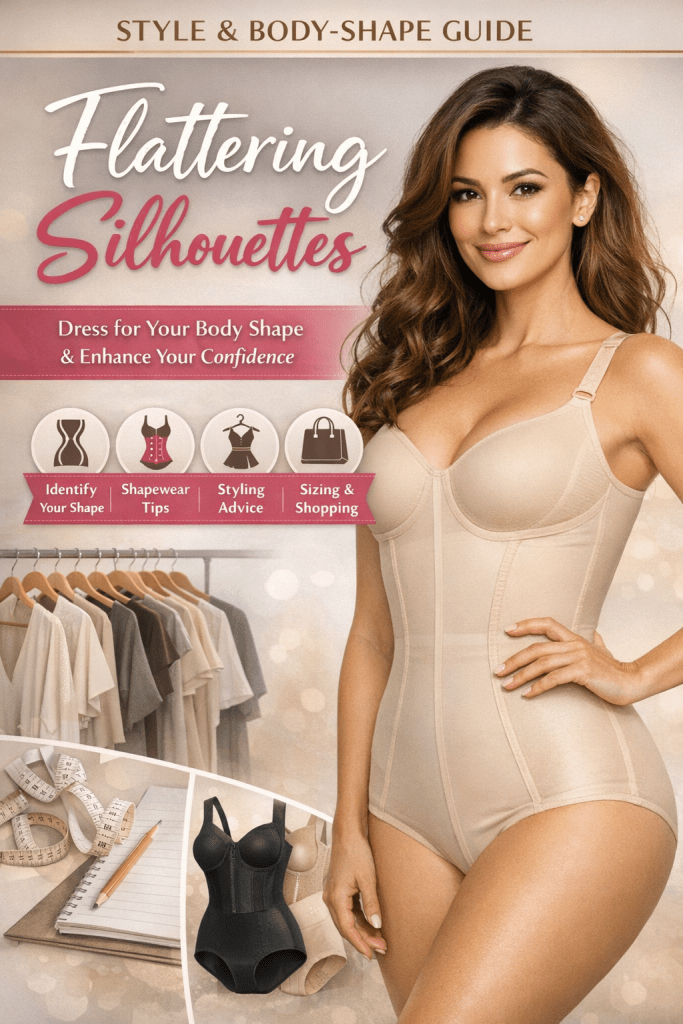
We have all stood before a mirror, wearing an ensemble that checks every seasonal trend box, yet feeling fundamentally “off.” In a culture dominated by fast fashion, we are conditioned to chase aesthetics. However, true style mastery is found at the intersection of human physiology, textile mechanics, and cognitive science. This is the discipline of Anthropometric Silhouette Engineering.
The structural implications are clear: to move beyond superficial fashion, we must treat the body as a structural foundation and the wardrobe as an architectural intervention. By shifting from a state of “body alienation”—viewing the self as an object to be judged—to “body neutrality,” style becomes a somatic tool for self-authorship. It is the technical bridge between who you are internally and how you manifest in the physical world.
1. Your Body is a Mathematical Profile, Not a Label
The era of vague, emotionally loaded labels like “petite” or “plus size” is over. Engineering your silhouette begins with quantitative classification. In this metric-driven discipline, your “shape” is a series of mathematical ratios between your shoulders, bust, waist, and hips.
One of the most empowering realizations in silhouette engineering is that a “defined waist” is not a subjective feeling; it is a 25% mathematical variance. Quantitatively, a waist is established when the measurement is at least 25% smaller than the bust and hips. Similarly, “proportional balance” is achieved when the shoulders and hips fall within a 5% margin of each other.
“The mastery of personal style rests upon a technical understanding of how garment construction interacts with anthropometric data to produce specific visual outcomes… treating the body as a structural foundation and the wardrobe as an architectural intervention.”
An expert engineer distinguishes between similar profiles with surgical precision. For example, while the Pear and Spoon profiles both feature wider hips, the Spoon is identified by a “shelf-like” protrusion of the hips and additional volume in the upper arms and thighs. The architectural solution for a spoon profile isn’t just volume; it is the Basque waist—using V-shaped or U-shaped seams to lower the visual starting point of the hips—or a snatched waist, where the garment is engineered with curved sewing rather than a tubular, boxy cut.
2. The Helmholtz Illusion: The Eye Tracks the Repetition
Visual illusions are the primary tools of optical mechanics. The classical rule—”vertical lines thin, horizontal lines widen”—is an oversimplification that ignores the Helmholtz illusion. Technical engineering reveals that horizontal stripes can actually make a figure appear taller and narrower. This occurs because the repetitions force the eye to track vertically across the lines to process the pattern, creating a perceived elongation.
We further manipulate perception through Texture Dynamics. Fabric choice is not just about feel; it is about how light interacts with the silhouette. Rough, heavily textured fabrics like boucle or tweed reflect light in multiple directions, adding sculptural bulk to the frame. Conversely, smooth fabrics like silk or georgette reflect light uniformly, creating a “liquid” movement that softens the silhouette.
To engineer length, we employ the Müller-Lyer Illusion. By utilizing “inward-facing angles”—most notably the V-neckline—we create a vertical focal point that draws the eye down from the face, elongating the torso. For those seeking maximum height, the Column of Color—wearing the same hue from shoulder to hem—creates an uninterrupted vertical line that remains the most effective tool in the engineer’s kit.
3. Enclothed Cognition: The Psychology of Self-Authorship
Style is an embodied experience. The phenomenon of enclothed cognition suggests that our clothes change our brain performance through two factors: the symbolic meaning of the garment and the physical experience of wearing it.
The landmark “Doctor’s Coat” study illustrates this: participants wearing a white coat described as a “doctor’s coat” performed significantly better on attention-related tasks than those wearing the same coat described as a “painter’s smock.” The brain adopts the psychological traits associated with the attire.
For those navigating high-stakes environments, clothing acts as psychological armor. A well-structured blazer doesn’t just look professional; it sends a signal to the wearer’s brain that reinforces an authoritative identity, lowering cortisol and supporting cognitive flexibility. It is a declaration of intent, ensuring your visibility matches your internal evolution.
4. The Triangle of Fit and the 10-Inch Drop
In male and athletic tailoring, the objective is the “Triangle of Fit”—the structural relationship between the shoulders, jacket length, and trouser rise. The shoulder is the “unalterable” mechanic; the seam must end precisely at the natural shoulder bone. Any droop or pinch compromises the entire architectural frame.
For the highly muscular inverted triangle physique, off-the-rack garments often fail because they are built for the trapezoid (a standard 6-inch drop from chest to waist). Athletic engineering requires a 10-inch drop to accommodate broad shoulders without creating a “tent” effect at the midsection.
The final mile of this engineering is waist suppression. By tapering the jacket waist by 1.5–2 inches, a tailor removes excess fabric at the lower back to highlight the V-taper. Furthermore, the gorge height—the point where the lapel meets the collar—directly influences perceived authority. A higher gorge draws the eye upward, projecting height and presence, while a lower gorge provides balance for taller frames.
5. The “Scoop and Swoop”: Structural Integrity of the Foundation
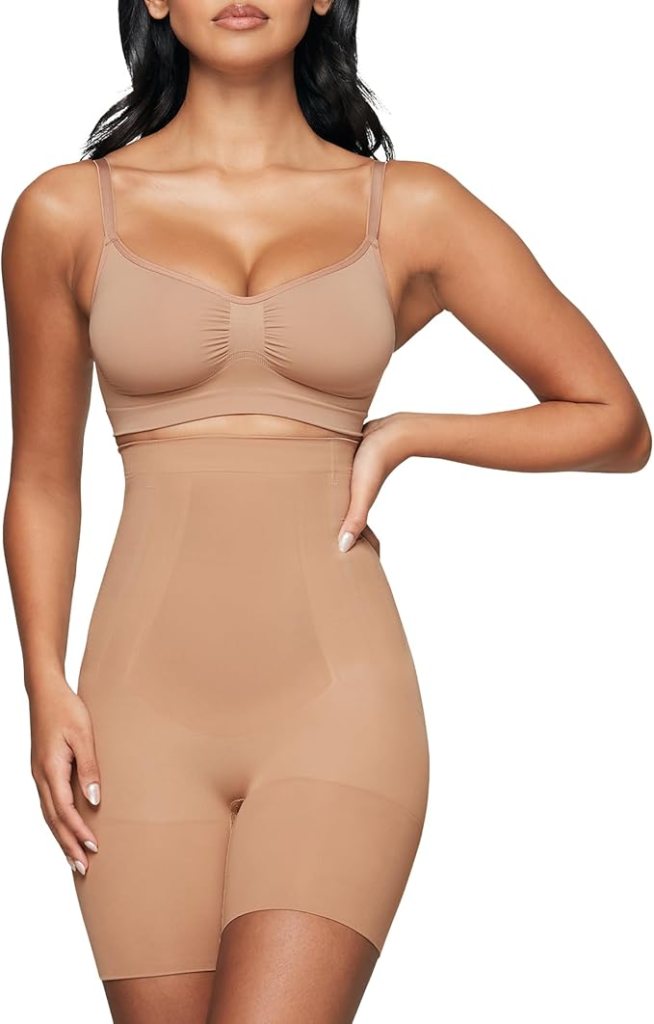
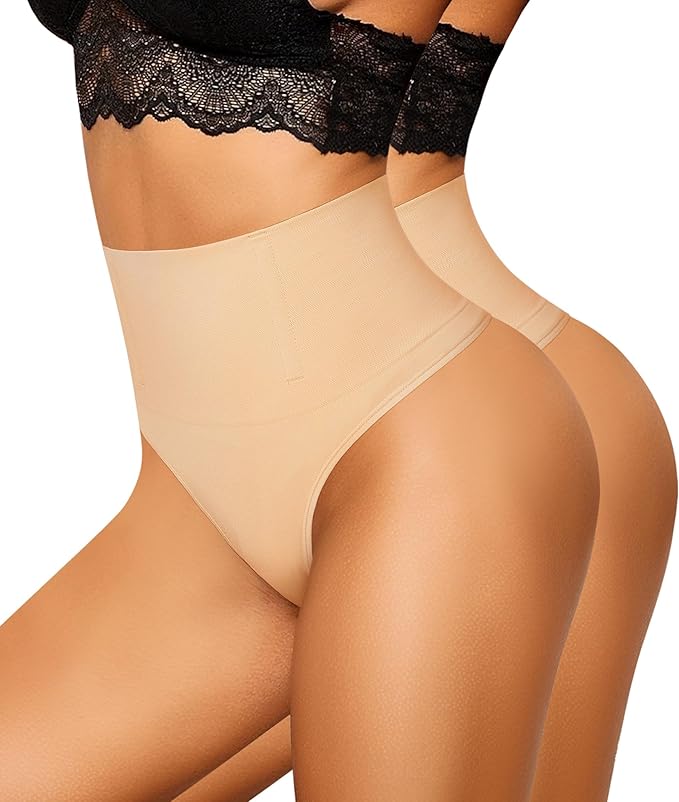
Architecture begins with the foundation. High-end undergarment engineering, particularly for bras, involves a complex construction of over 100 components. If the foundation fails, the entire silhouette collapses. A loose bra band causes the bust to sag into the waist area, mathematically erasing the narrowest part of the torso and destroying proportional balance.
The “scoop and swoop” is the essential technical maneuver to ensure tissue is properly seated within the cups, instantly restoring the anatomical pivot point of the waist. However, engineering requires maintenance. To preserve structural integrity, undergarments should be washed every 3–5 wears in a delicate cold cycle and never placed in a dryer. Heat destroys the elasticity required for support, leading to a structural failure that no amount of external tailoring can fix.
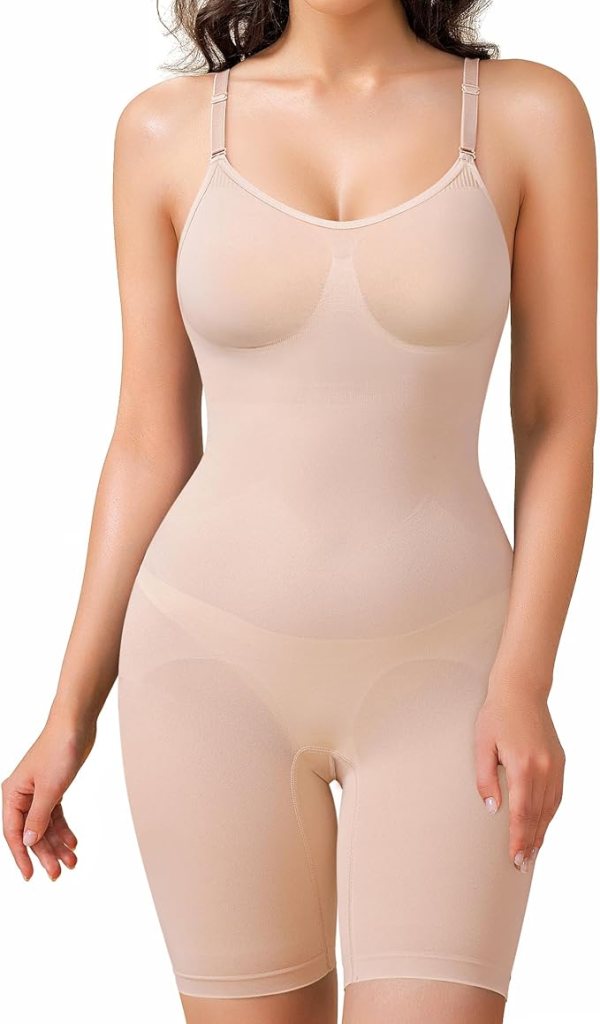
Conclusion: From Performance to Presence
The shift from “dressing for the feed”—seeking external validation through filtered aesthetics—to “dressing for the role” is the ultimate act of identity reclamation. When your external presentation is architecturally aligned with your internal self, you move from a state of performance to a state of presence.
Your style superpower is a function of your unique geometry:
- Hourglass: Naturally balanced proportions suited for structured drapes and waist-centric silhouettes.
- Pear: The capacity to carry bold, statement-making tops and structured shoulder details.
- Apple: The ability to master ethereal, floating silhouettes and vertical elongation.
- Rectangle: The capacity to carry minimalist, architectural trends and “curve-carving” layers.
Are you currently dressing for approval, or are you engineering your identity? When style is a supportive ally rather than a performance test, you unlock a stabilized sense of confidence that persists long after the trends have faded.
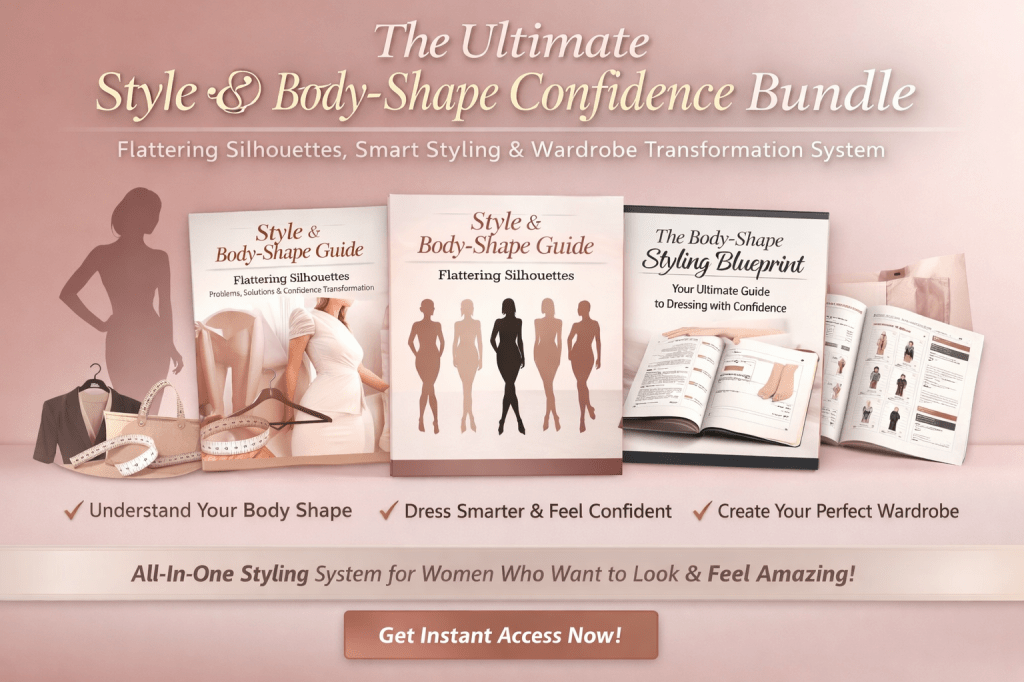
If you’re ready to stop guessing your size and start dressing with confidence, the Ultimate Style & Body-Shape Confidence Bundle gives you everything in one place—from understanding your body shape and choosing flattering silhouettes to practical outfit formulas and printable styling worksheets. Instead of wasting money on clothes that never fit right, you’ll learn how to build a wardrobe that actually works for you. You can get instant access to the complete bundle here: https://payhip.com/b/f9msI and start transforming the way you shop, dress, and feel every day.







Leave a comment