When Arun turned 52, nothing about him looked unhealthy.
He walked every morning.
Never missed his cardio.
Rarely skipped a day.
But one morning, while tying his shoes, he felt a sharp pull in his lower back—something so simple suddenly painful. Over the next few months, stiffness crept into his hips. His balance felt “off.” Getting up from the floor wasn’t as easy as it used to be.
Confused, he asked his doctor a question many people ask too late:
“But I exercise every day. Why does my body feel like it’s aging faster?”
The answer surprised him.
The Hidden Problem With “Doing the Right Thing”
For years, Arun believed the same thing most of us do:
Exercise = cardio.
Walk more. Run more. Burn calories. Repeat.
And to be fair, cardio is powerful. It strengthens the heart, improves circulation, and lowers disease risk.
But here’s the truth most fitness advice skips:
👉 Your body doesn’t age because you stop moving.
It ages because you stop moving in different ways.
Arun was doing one thing really well—while quietly neglecting everything else his body needed to stay functional long-term.
Aging Isn’t About Years—It’s About What You Lose
When people talk about aging, they usually mean wrinkles or gray hair.
But real aging shows up differently:
- Loss of muscle
- Stiff joints
- Poor balance
- Slower recovery
- Fear of movement
These don’t happen overnight. They happen slowly—often while people believe they’re being “healthy.”
And the biggest culprit?
Repetition without balance.
What Long-Living People Do Differently
If you look at populations known for longevity—places where people live well into their 90s and beyond—you’ll notice something interesting.
They don’t “work out” the way modern fitness culture does.
They:
- Walk often
- Lift things naturally
- Squat, bend, stretch
- Maintain balance through daily movement
- Rest without guilt
They don’t push extremes.
They don’t specialize in one type of exercise.
They mix movement naturally.
And science is finally catching up to what their bodies already knew.
The Three Types of Movement Your Body Needs to Age Well
Longevity-focused movement is built on balance—not intensity.
1. Cardio (Your Heart’s Lifeline)
Cardio keeps your heart and lungs strong. It helps you walk farther, breathe easier, and maintain energy as you age.
But cardio alone has a downside:
Too much, without support, can lead to muscle loss over time.
2. Strength (Your Insurance Policy)
Muscle isn’t just about looking fit. It’s what:
- Protects your joints
- Supports metabolism
- Keeps bones strong
- Allows independence later in life
Without strength training, the body slowly loses the ability to do basic tasks—often without warning.
3. Mobility & Stretching (Your Freedom to Move)
Mobility keeps joints moving smoothly and pain-free.
Stretching protects posture, balance, and range of motion.
Without it, stiffness becomes normal—and movement starts to feel risky.
Here’s the problem:
Most people focus on one of these and ignore the others.
That imbalance is where aging accelerates.
Arun’s Turning Point
When Arun started adding light strength training twice a week and a short daily stretching routine, something changed.
Not immediately.
Not dramatically.
But gradually:
- His back stopped “catching”
- His hips felt looser
- His balance improved
- He felt confident moving again
The biggest shift wasn’t physical—it was mental.
He stopped exercising to burn calories
and started moving to protect his future body.
Why “More” Isn’t the Answer—Smarter Is
Modern fitness often pushes extremes:
- Train harder
- Sweat more
- Push limits
But longevity rewards something else entirely:
Consistency + balance + recovery
You don’t need brutal workouts.
You don’t need to exhaust yourself.
You don’t need perfection.
You need a system that reminds you to:
- Mix cardio with strength
- Pair strength with mobility
- Balance effort with recovery
That’s where most people struggle—not because they’re lazy, but because they lack structure.
Turning Longevity Into Something You Can Actually Follow
Knowing this information is one thing.
Applying it week after week is another.
That’s why structured, printable systems work so well—especially for busy adults who don’t want to overthink fitness.
Instead of guessing:
- “Did I move enough today?”
- “Am I doing too much cardio?”
- “Why do my joints still feel stiff?”
A simple framework makes balance visible.
That’s exactly why tools like guided blueprints, balance checklists, and stretching guides exist—to turn longevity into a daily habit, not an abstract idea.
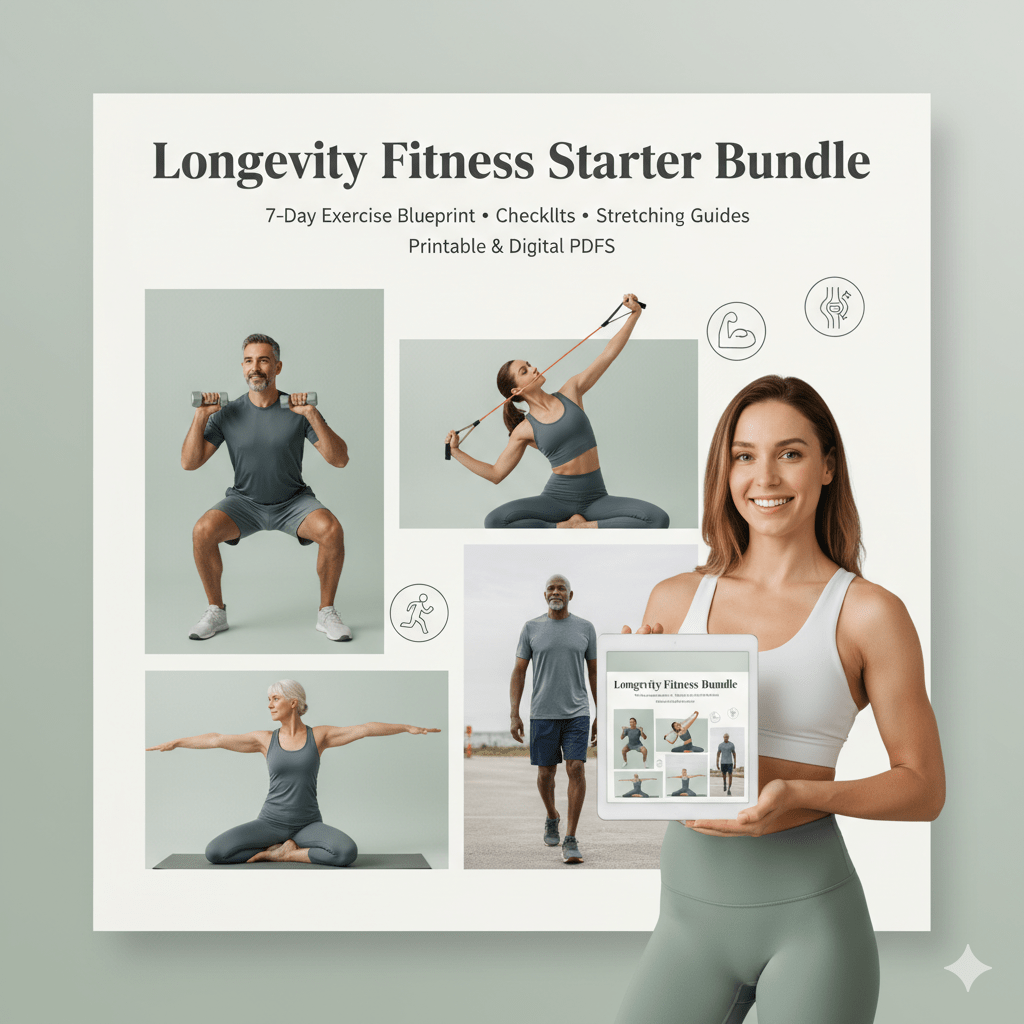
If you’re looking for a done-for-you way to apply everything discussed here, this Longevity Movement Bundle brings it together in one place:
👉 7-Day Varied Exercise Blueprint (how to mix movement correctly)
👉 Printable Cardio–Strength–Mobility Checklists
👉 Illustrated Stretching Guide for Longevity
You can explore it here:
🔗 https://payhip.com/b/vGbOn
It’s designed for real life—not fitness perfection.
The Question That Changes Everything
Here’s the question Arun asked himself—and one worth asking today:
“If my future self could choose how I move right now…
would they thank me?”
Longevity isn’t built in one workout.
It’s built in the patterns you repeat.
The mix you choose today quietly shapes how you move, feel, and live years from now.
And the best time to protect that future?
Not when pain shows up.
Not when mobility disappears.
But while you still feel ‘fine.’
Final Thought
You don’t need to train harder to live longer.
You need to move smarter.
Mix your movement.
Respect your joints.
Protect your strength.
Your future body is already counting on it.
Imagine your body 10 years from now.
Still strong.
Still flexible.
Still pain-free.
That doesn’t happen by accident.
It happens with balanced movement done consistently.
I built a complete Longevity Movement Bundle to make it easy:
✔ Guided routines
✔ Balance checklists
✔ Daily stretching system
👉 Start today:
https://payhip.com/b/vGbOn






Leave a comment