Introduction: The Myth of the High-Cost Startup
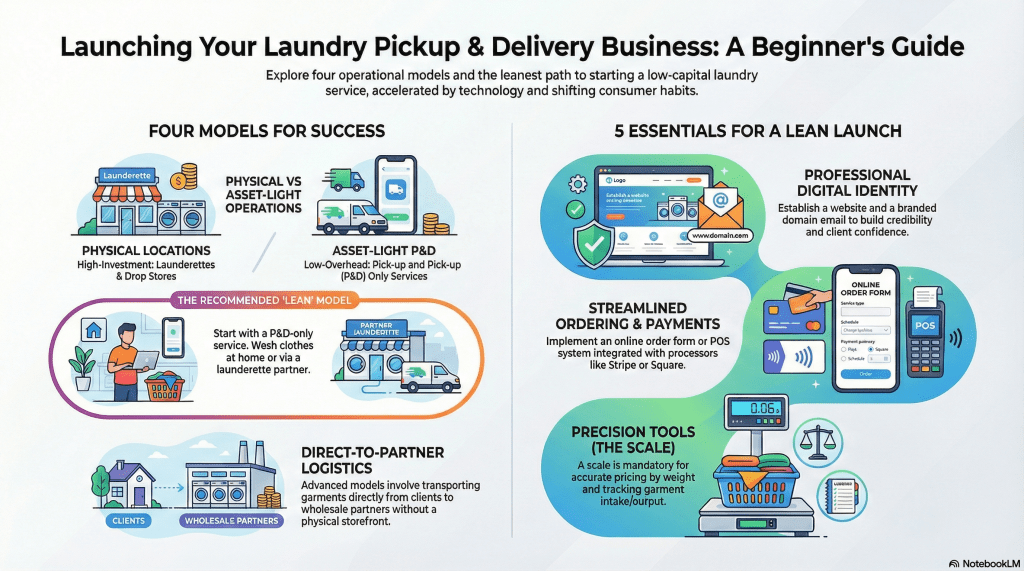
The idea of starting a laundry business often conjures images of massive capital investment—rows of commercial washers, a physical storefront, and significant overhead. For years, this was the reality. However, according to laundry industry expert Waleed Cope, technology and new business models have caused the barrier to entry to drop dramatically. For aspiring entrepreneurs with limited capital, the path to launching a successful wash-and-fold service is more accessible than ever. Industry insider Waleed Cope reveals four critical—and often overlooked—investments that separate thriving lean laundry businesses from those that fail to gain traction.
——————————————————————————–
1. The Barrier to Entry Has Crumbled—You Don’t Need to Own a Laundromat
The traditional route into the pickup and delivery (PUD) laundry business was an expensive one. An entrepreneur typically had to own a physical laundromat first and then add delivery as an ancillary service. This high-cost model made it difficult for newcomers to enter the market.
Today, that model is no longer the only option. Factors like the COVID-19 pandemic, which normalized having chores done via delivery, combined with technological advancements and different partnerships, have fundamentally changed the industry. The most significant shift is that it’s no longer necessary to own a physical laundromat to get your business off the ground.
——————————————————————————–
2. The “Leanest” Model: Pickup & Delivery Only
For an entrepreneur with limited capital, Waleed Cope recommends a specific, lean business model: pickup and delivery only, with no physical location. This approach offers the lowest barrier to entry, allowing you to start generating profit quickly that can be reinvested back into the business.
The workflow is straightforward: after picking up laundry from a client, you have two main options for processing. You can do the wash-and-fold work yourself, having arranged to use the machines at a local laundromat, or you can outsource the labor by paying a partner laundromat a wholesale rate to process it for you. Either way, you handle the final delivery back to the client. This model eliminates the immense cost of securing and outfitting a commercial space, focusing instead on service and logistics.

——————————————————————————–
3. Your Email Address Is a Critical Investment in Trust
When starting on a lean budget, every dollar counts. But as Cope stresses, “We’re just calling it like it is”—using a free Gmail or Yahoo address for your business is a critical mistake. Investing in a custom domain email (e.g., support@yourlaundrybusiness.com) is not an expense; it’s a non-negotiable investment in customer confidence. This custom email, which should be linked to your professional website—another essential tool Cope recommends—it is the first step in building a credible digital presence.
…you don’t want to use Gmail, Yahoo, or AOL for your business name or your business email; like, you just don’t want to do that. You want to provide people with the utmost assurance; you want them to have confidence in your business that you have a professional and reputable establishment…
——————————————————————————–
4. A Scale Isn’t Just for Pricing—It’s for Accuracy
While a scale is the obvious tool for per-pound pricing, its most critical function in a lean model is risk management. Even if you decide to charge by the bag, a scale remains an essential tool for ensuring accuracy and protecting your business. By weighing every order upon receipt and again before delivery, you create an unambiguous record. This simple procedure is a strategic imperative to track that every item that came in goes back out, giving both you and your client total peace of mind.
…if you choose to go by the bag, you’re still going to need a scale, and the reason I say you’re still going to need a scale is because you want to know how much clothing came in based on the pounds, and you want to know how much clothing you’re giving back to them so you can track accuracy…
——————————————————————————–
Conclusion: Professionalism Is the New Capital
The modern laundry startup thrives not on massive capital, but on earned trust. Every detail—from a professional email that signals legitimacy to a simple scale that guarantees accuracy—is an investment in customer confidence, which has become the most valuable currency in this accessible new market.
Now that the financial barriers are lower, what’s the first small, professional step you’ll take to build customer confidence in your new business?
If you’ve been seriously considering a local service business with real recurring income, a mobile laundry model is one of the smartest plays right now. Instead of guessing your way through setup, pricing, and operations, this Mobile Laundry Business Blueprint (USA Edition) lays everything out clearly—from real U.S. startup costs and pricing benchmarks to step-by-step SOPs, checklists, and a 30/60/90-day launch plan. The best part? It’s fully Canva-editable, so you can brand it, customize it, and even use it for client presentations. If you want a proven structure instead of trial-and-error, you can access the complete guide here: https://payhip.com/b/qrpJ0








Leave a comment