1. Introduction: The Billion-Dollar Business Hiding in Your Neighborhood
Starting a junk removal business is deceptively simple, yet in 2026, it remains one of the most misunderstood gold mines in the local service economy. For most, the barrier to entry is enticingly low: just a truck, some muscle, and a smartphone. However, while the physical labor is straightforward, the “success formula” sold by most industry insiders is fundamentally flawed.
The market is currently saturated with “gurus” selling high-priced coaching programs that overcomplicate the logistics while ignoring the only metric that actually matters. The reality is that you don’t need a five-figure mentorship to launch. You need to understand that in the modern economy, your SEO is your storefront; your truck is merely the back office.
2. The Marketing Myth: Why Your “Guru” Isn’t Telling You Everything
In the junk removal industry, operational excellence is secondary to lead generation. You can have the cleanest crew and the most efficient loading techniques, but if the phone isn’t ringing, you don’t have a business—you have a hobby. Marketing is the “one big component” that dictates your Customer Acquisition Cost (CAC) and your ultimate survival.
The irony of the coaching industry is thick: many “mentors” selling business advice are not actually running their own marketing. They outsource their growth to specialized agencies while selling you operational fluff.
“Most of the people in these courses or coaching programs don’t actually do their own marketing, so they’re not selling you the one thing that’s actually going to help you grow.”
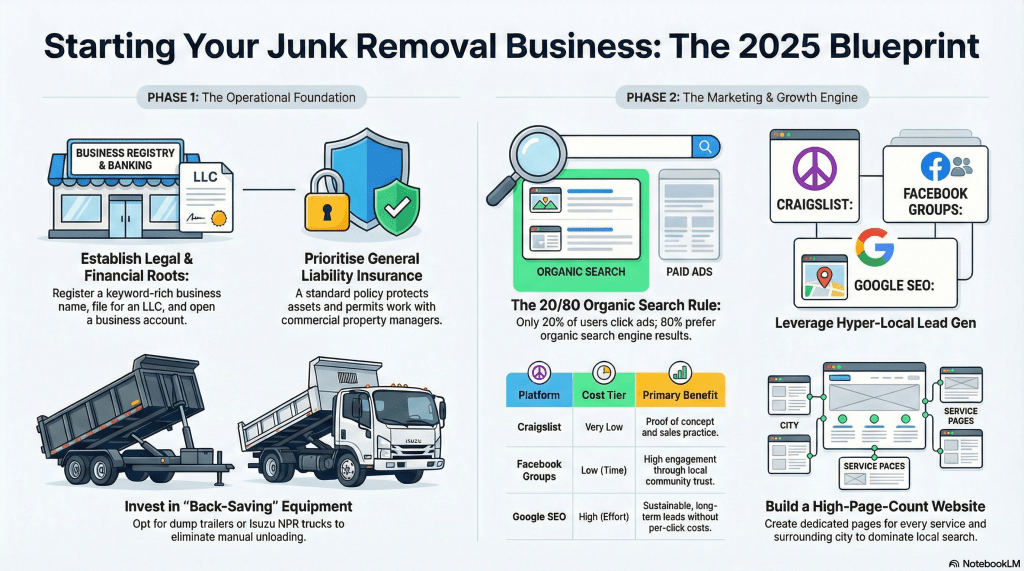
To win, you must bake marketing into your foundation—starting with your name. A digital strategist wouldn’t name a company “Smith Enterprises. “That is a dead end for search engines. You need keywords. “Mario’s Junk Removal Services” or “503 Junk Removal” tells both the customer and Google exactly what you do and where you do it.
3. The Craigslist “Ghost” Strategy: Proof of Concept Before You Spend a Dime
Before you file for an LLC, buy insurance, or even touch a piece of furniture, you need a data-backed proof of concept. The most efficient way to get this is the Craigslist “Ghost” strategy. For a nominal fee of $5 per post, you can run ads to practice lead handling without the overhead.
Post your services at a frequency of four times a week to get a statistically significant sample of your local market demand. When the leads come in via call or text, ask for photos and provide a real quote. Instead of performing the work, track every potential dollar in your “Notes” app. Once you see exactly how much revenue you are “missing out on” in a single week, the decision to invest in a truck and a federal tax ID becomes a calculated move rather than a gamble.
4. The 20/80 Google Split: Why Paid Ads Are a Starter’s Trap
When newcomers transition to Google, they almost always dump their budget into Pay-Per-Click (PPC) ads. While Google Ads provide immediate visibility, they are a “starter” tool, not a scaling strategy. Relying on them long-term leaves you “tied down” to a high cost-per-lead that eats your margins.
The industry is defined by the “20/80 split.” Only 20% of users click on sponsored ads. The remaining 80% go straight to the organic listings and the “Local Pack.” This is because users trust Google’s organic “recommendation” more than a paid advertisement. To compete with giants like 1-800-GOT-JUNK, you must dominate “money phrases” like “junk removal near me” through aggressive SEO. Organic dominance isn’t just a marketing choice; it’s the only way to capture the majority of the market share.
5. The Proximity Paradox: The “Gold Nugget” of Google My Business
The Google My Business (GMB) listing is the single most valuable asset in local search, but it is limited by the “proximity factor.” A listing registered in the city center will rarely appear for a customer in a suburb 20 miles away. Google simply prioritizes the closest verified options.
The “gold nugget” for scaling is creating multiple verified listings to blanket your entire service area. This is the “hoop” most owners won’t jump through because of Google’s strict video verification requirements. However, duplicating your footprint is the only way to bypass geographic limitations.
Crucial Technical Note: To avoid being flagged or banned, each additional listing must have a unique phone number and a unique website. You are essentially creating a digital twin of your business for every major suburb you intend to dominate.
6. More Than Just a Truck: The Equipment Choice That Saves Your Back
While a standard truck and landscaping trailer can get you started, manual unloading is a one-way ticket to physical burnout and inefficiency. Your first major milestone should be the transition to a dump trailer.
If your budget allows, the Isuzu NPR is the absolute gold standard for the industry. Beyond the hydraulic lift, it offers a level of professionalism that a wrapped trailer can never match. Furthermore, the Isuzu NPR is a “stress reduction” tool; its turning radius and compact footprint make it far superior for navigating tight urban driveways and busy residential streets where a trailer would be a liability.
For high-margin specialty jobs, your “dynamic duo” is a Sawzall and a pair of heavy-duty loppers. These are the primary tools for dismantling hot tubs—turning a complex, multi-hour nightmare into a routine, highly profitable service call.
7. Conclusion: The Size of Your Digital Footprint
In 2025, the revenue potential of your business is a direct reflection of the size of your website. Major players like JunkKing.com don’t succeed by accident; they maintain over 10,000 pages of content to ensure they show up for every possible search permutation in every possible zip code.
Every service page and every city-specific landing page you build is a “digital employee” that works for you 24/7, hunting for leads while you’re out on a job.
As you prepare to enter this billion-dollar industry, ask yourself one question: Are you building a manual labor job for yourself, or are you building a digital marketing machine that just happens to pick up junk?
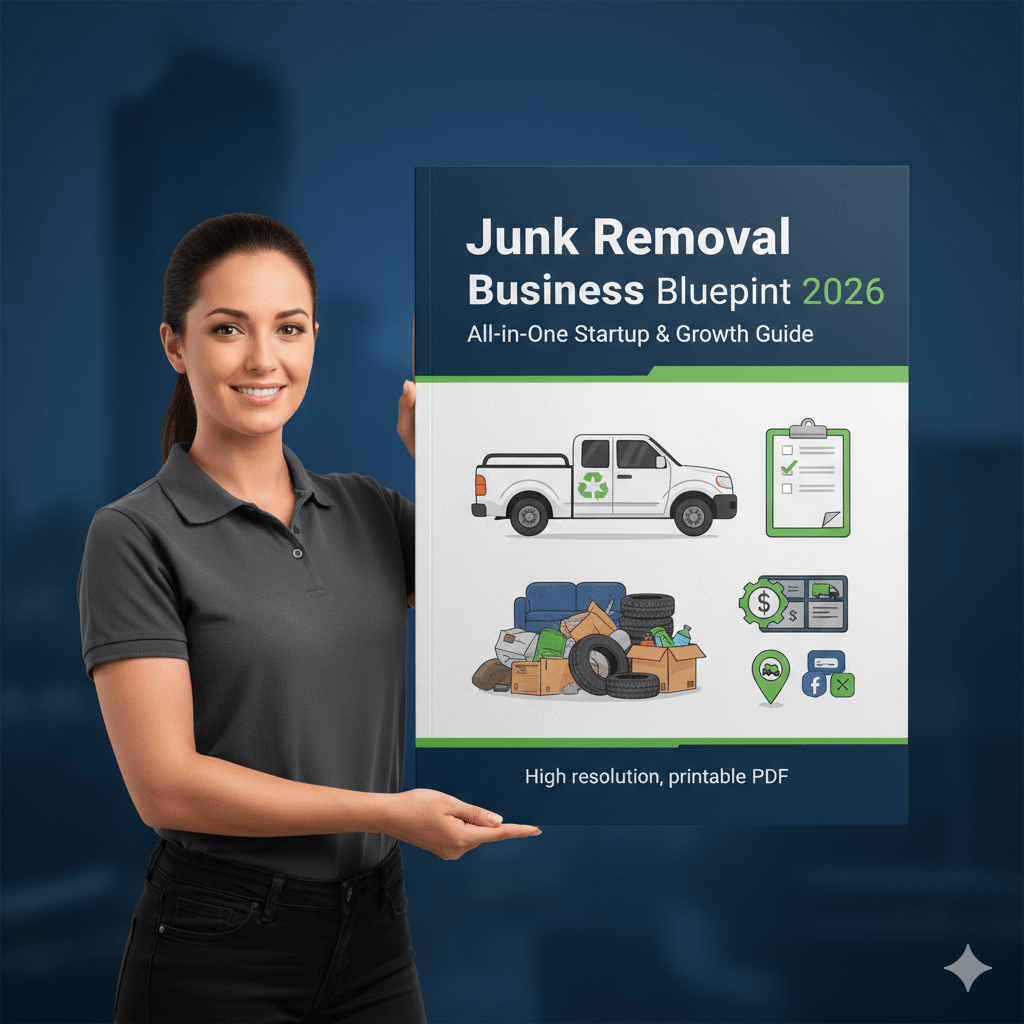
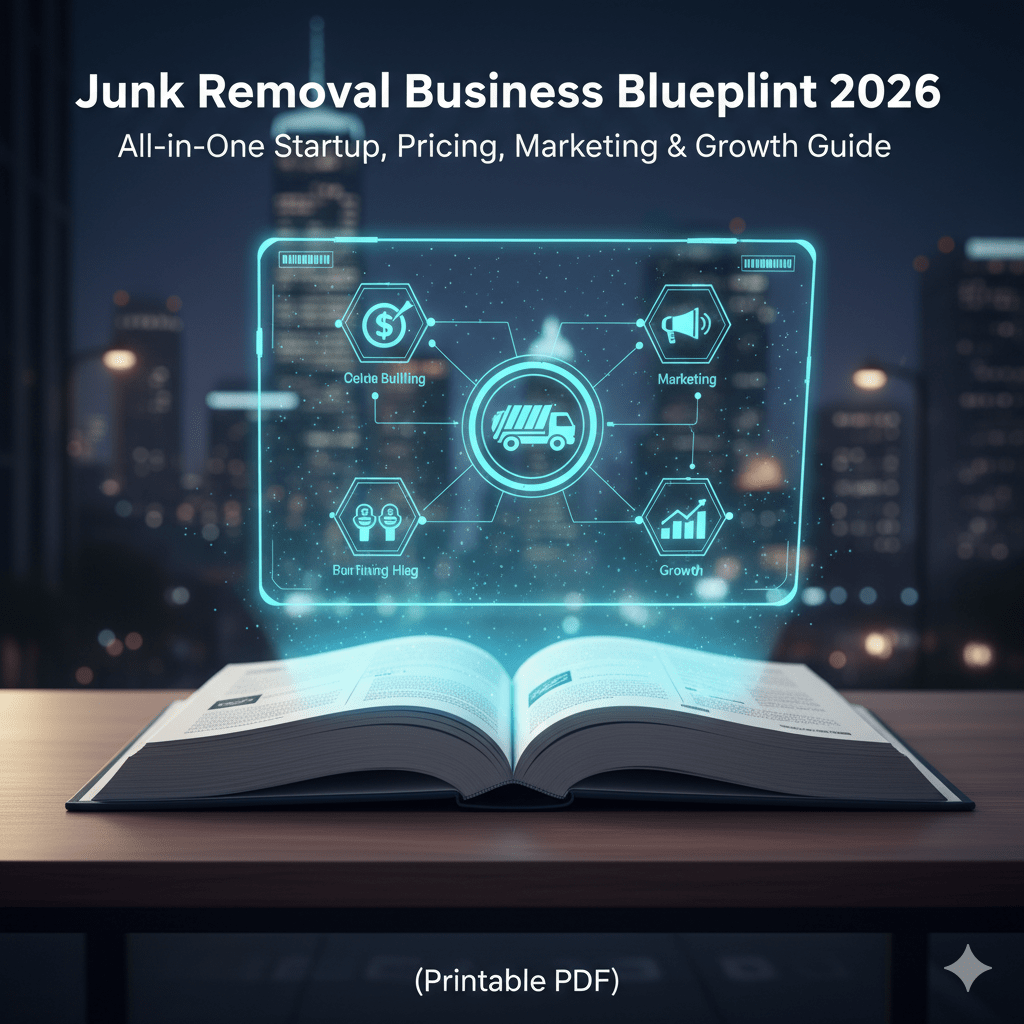
If you’re serious about launching or scaling a profitable junk removal business, don’t miss out on the Junk Removal Business Blueprint 2026—a complete, step-by-step resource packed with startup strategies, pricing systems, marketing templates, operational checklists, and growth plans designed specifically for this niche. Whether you’re just starting or looking to boost your leads and profits, this printable, all-in-one PDF guide has everything you need to build a successful service business with confidence: https://payhip.com/b/kzEK4







Leave a comment