Introduction: The Story Behind Your Delivery
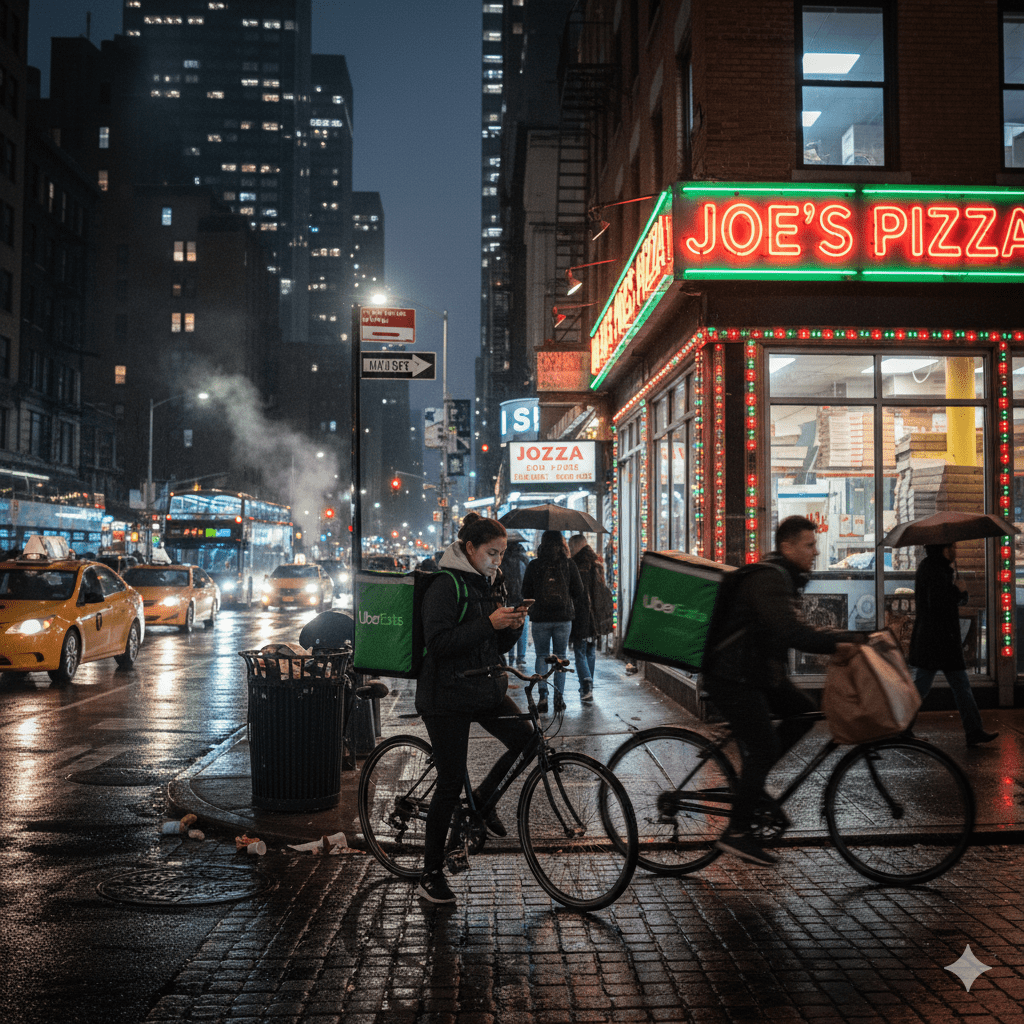
Ever order food late at night and wonder about the person navigating the relentless energy of New York City to bring it to your door? A “Day in the Life” video series gives us a raw, inside look, following an UberEats driver named Anthony on his night shift through the perpetually busy streets of Manhattan. This post breaks down the key realities of his gig economy job, revealing the truth behind the convenience.
Subscribe to get access
Read more of this content when you subscribe today.
Takeaway 1: It’s a Constant Physical Hustle Against the City Itself
The job is far more than a simple drive; it’s a constant physical battle against the urban environment. Navigating Manhattan after dark pits the driver against the city’s unforgiving clock, where success is measured in seconds saved. The work demands intense focus and stamina, with the primary challenges being “dodging traffic” and “hustling across neighborhoods” just to complete a delivery. This reality highlights that the core of the job is a demanding race against an environment designed to slow you down.
Takeaway 2: The Grind Involves More Waiting and Interaction Than You’d Think
A significant portion of a delivery driver’s shift isn’t spent in motion, but in the unseen “in-between” moments. This includes crucial, unpaid tasks like “waiting on orders” at restaurants and “interacting with restaurants and customers” to coordinate pickups. It’s a counter-intuitive reality of the gig: a driver’s time and income are heavily dictated by factors entirely outside their control, from a kitchen’s prep time to communication hurdles. This hidden labor is a fundamental, yet invisible, part of every successful delivery.

Takeaway 3: The Job Reveals the True “Ups and Downs” of Gig Work
Following Anthony’s shift reveals more than the mechanics of food delivery; it offers a clear window into the gig economy itself. His experience encapsulates the promise and peril of this work, showing firsthand the “challenges and realities” and the constant “ups and downs” that define the job. It’s a ground-level view of the “truth about what it takes to make a living delivering food in New York.”
The work provides an authentic journey into the truth of the gig economy, showing firsthand what it really takes to make a living in one of the busiest cities in the world.

Conclusion: A New Perspective on Your Next Order
The next time you tap your phone for a meal, remember the complex human effort behind that simple transaction. The convenience we enjoy is built on a driver’s physical battle with the city, their patience during moments of unseen waiting, and their navigation of the profound economic uncertainties of gig work. Knowing the gauntlet of hustle, delay, and risk behind every order, how does our definition of “convenience” change?
Subscribe to get access
Read more of this content when you subscribe today.
My Manhattan Night Shift: The UberEats Grind
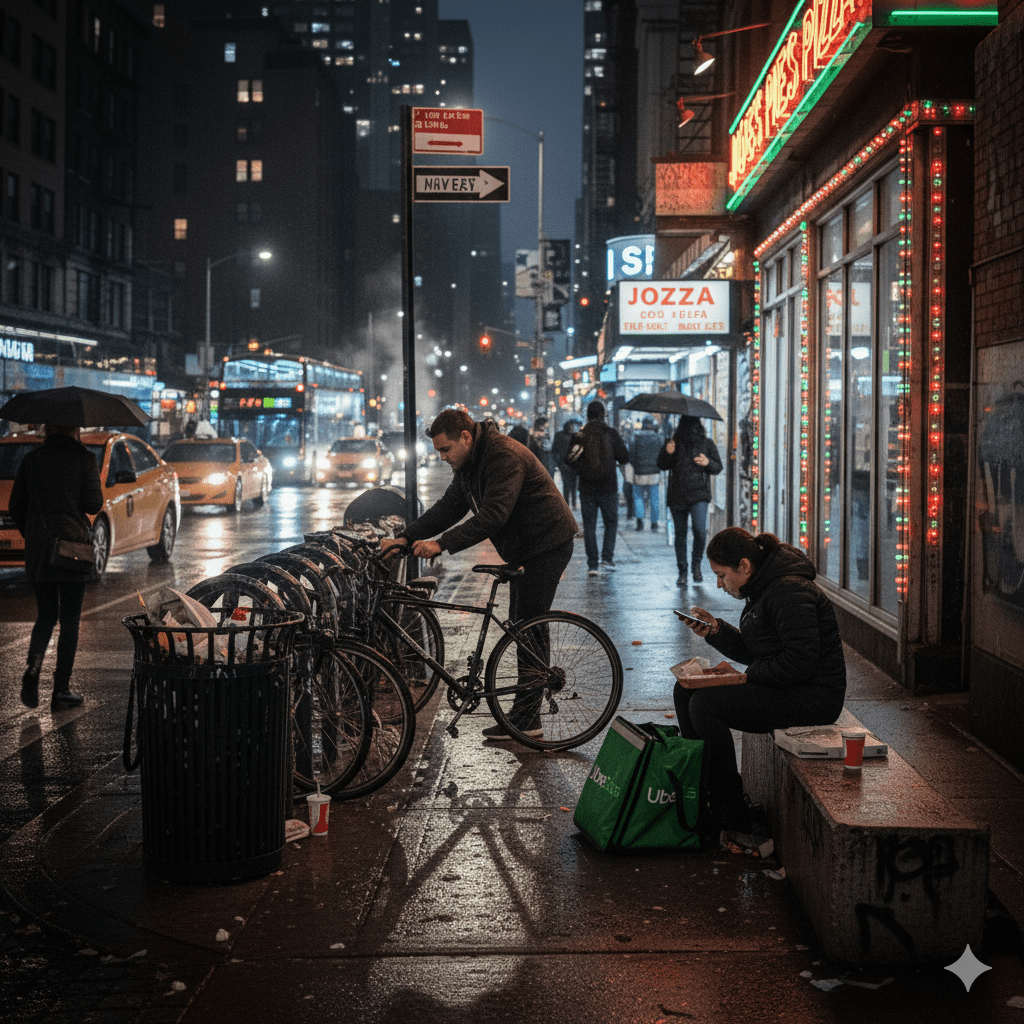
My name’s Anthony, and this is my office. For most people, sunset is a signal to wind down. For me, it’s the starting gun. The halal cart steam starts mixing with the bus exhaust, and the tourist cameras flash like strobes. This is when the city really wakes up, and my shift begins. There’s an energy here you can’t find anywhere else, but when you’re on the clock, you have to tune out the noise and lock in. The usual circus. Gotta stay sharp and keep moving. My purpose out here is simple: to make a living in the city that never sleeps, one delivery at a time. And the first part of that grind always starts with the city’s infamous traffic.
2.0 Navigating the Concrete Jungle
The first ping comes in, and the race is on. Weaving through Manhattan isn’t just a dance; it’s a fight. You smell the roasted nuts from a street vendor one second and hear the hiss of a crosstown bus’s air brakes the next. You learn to feel the street through your bike frame—every pothole on 10th Avenue is a jolt that reminds you to stay awake. Vigilance isn’t just a good idea; it’s what keeps you in one piece out here.
My Top 3 Street Obstacles:
- Dodging Traffic: This isn’t just about avoiding cars; it’s about predicting them. You learn to read the body language of a cabbie about to make an illegal U-turn or a tourist about to step into the bike lane, phone first.
- Hustling Across Neighborhoods: Blasting down a one-way in the East Village is pure instinct. An hour later, you’re in Midtown, where the avenues are wide but gridlocked, and it’s a chess match, block by block. Each neighborhood demands a different strategy.
- Constant Surprises: You can plan a route, but you can’t plan for the city. From sudden road closures for a movie shoot to a double-parked truck blocking the one street you need, the city always throws a new problem at you.
With the first leg of the journey complete, I pull up to the restaurant, ready for the next phase of the job.

3.0 The Waiting Game and The Pickup
I walk into the restaurant, a blast of warm air and cooking smells hitting me. I give my order number to the host, and then comes the part of the job that’s all about patience: the waiting game. Sometimes the bag is sealed and sitting on the counter, a perfect handoff. Other times, I join a small crowd of other delivery workers, all of us checking our phones and watching the kitchen doors swing open and shut.
“Every kitchen’s a different beast. Some places, the bag’s waiting for you under a heat lamp, like they respect your time. Others, you’re just another helmet in a line, invisible. You learn not to take it personally. It’s just the rhythm of the city’s stomach.”
Finally, my number is called. With the order secured in my insulated bag, the clock starts ticking again. It’s time to get this food to the customer.
4.0 The Final Hustle: Door to Door
This is the final hustle. With the food in hand, I’m back on the streets, navigating across town to the customer’s location. This part of the journey is a focused sprint to get the delivery completed efficiently. Finding the right apartment building, navigating the lobby, and getting up to the correct floor is a mini-challenge in itself.
The handoff is usually a quick head-nod and a “thanks, man.” You’re just a ghost in their evening, a necessary link between their craving and their couch. Fine by me. And just like that, it’s over, and my phone is already buzzing with the next pickup. Repeat that a dozen times, and suddenly the late-night revelers are gone, replaced by the early morning quiet.
5.0 The Shift Ends: Reflections on the Grind
As the night winds down and the orders slow, I start heading home. My shift was a collection of these small journeys—a series of challenges and quiet victories against the city’s chaos. This job is more than just picking up food and dropping it off; it’s an authentic journey through the heart of New York City. The central truth is that to make a living doing this, you need resilience, focus, and a deep understanding of the city’s pulse. This isn’t just a job; this is the real New York hustle.

Briefing: The Realities of a Manhattan UberEats Driver
Executive Summary
This document synthesizes insights from a media piece titled “Manhattan Night Shift: UberEats Delivery Grind,” which profiles a full-time UberEats delivery worker named Anthony. The piece, framed as an episode in a “Day in the Life” series, aims to provide an authentic, first-hand account of the challenges and realities inherent in gig economy food delivery within New York City. The core narrative focuses on the strenuous “grind” required to make a living, highlighting the constant negotiation of logistical, physical, and interpersonal obstacles. Key operational challenges documented include navigating dense Manhattan traffic, managing wait times for orders, and interacting with both restaurants and customers during a night shift. The stated purpose is to reveal the “ups and downs” and the “truth” of this work to an audience curious about the gig economy, NYC food delivery, and the lives of everyday workers.
——————————————————————————–
1. Profile of the Subject
The source material centers on a specific individual to illustrate the broader themes of gig work.
- Individual: Anthony
- Occupation: Full-time food delivery worker
- Platform: UberEats
- Location of Work: Manhattan, New York City
- Work Schedule: Night Shift
2. Core Themes and Narrative Focus
The media piece is structured around several central themes intended to provide a comprehensive and unfiltered view of the profession.
The “Grind” of Urban Gig Work
The narrative is explicitly framed as a “grind,” emphasizing the persistent effort and difficulty involved. The piece promises to show what it “really” takes to make a living, suggesting a focus on the economic and physical hardships of the job in “the city that never sleeps.”
Authenticity and Reality
A primary goal of the piece is to present an “authentic journey” into the life of a delivery driver. It contrasts a potentially sanitized view of gig work by focusing on the “challenges and realities” and the “truth” of the profession. This includes documenting both the “ups and downs” to provide a balanced but realistic perspective.
The NYC Environment as a Key Factor
Manhattan is presented not just as a backdrop but as an active variable in the work experience. Described as “one of the busiest cities in the world,” its environment directly shapes the challenges faced, from traffic congestion to the logistics of moving across diverse neighborhoods.
3. Documented Occupational Challenges
The source context outlines several specific, recurring challenges that define the work experience for the delivery driver. These can be categorized as follows:
Logistical and Navigational Hurdles
- Navigating Busy Streets: The driver must contend with the complex and congested streetscape of Manhattan.
- Dodging Traffic: This is highlighted as a constant, active challenge, implying risks to safety and efficiency.
Operational Demands
- Waiting on Orders: The process involves periods of waiting, which is a key component of the job’s workflow.
- Hustling Across Neighborhoods: The work is physically demanding, requiring rapid movement across different parts of the city.
Interpersonal Interactions
- Restaurant Coordination: The driver’s role requires direct interaction with restaurant staff to pick up orders.
- Customer Engagement: The final step of the delivery process involves interactions with the end customers.
4. Stated Purpose and Target Audience
The media piece is designed to appeal to a specific audience by offering a unique, behind-the-scenes perspective.
- Primary Purpose: To provide a first-hand, observational look into the life of an everyday worker, specifically within the context of the modern gig economy in a major metropolitan area.
- Target Audience Segments:
- Individuals curious about the nature and viability of gig economy jobs.
- Those with a specific interest in the food delivery ecosystem within New York City.
- A general audience that consumes “behind-the-scenes” content about different professions and lifestyles.
The Grind Never Sleeps: A Look into the Life of an UberEats Driver in NYC
Introduction: The Reality of Gig Work in the Big City
Ever wondered what it’s really like to work a night shift as an UberEats delivery driver in New York City? To understand the world of gig work in the city that never sleeps, we follow Anthony, a full-time food delivery worker, on his authentic journey through the controlled chaos of Manhattan. This is a first-hand look at the realities, challenges, and core tasks of a job where the grind is constant and every street corner presents a new variable.

——————————————————————————–
1. The Core Responsibilities: More Than Just a Delivery
For Anthony, a shift is a constant cycle of distinct tasks that go far beyond simply dropping off a meal. A single delivery is a multi-step process demanding focus, speed, and an intimate knowledge of the city’s rhythm.
The key activities in this cycle include:
- Navigating the City: Hustling on two wheels across various Manhattan neighborhoods, calculating the most efficient path from pickup to drop-off.
- Interacting with Restaurants: Coordinating with kitchen staff at the point of pickup, a critical handoff that sets the pace for the entire delivery.
- Managing Orders: Enduring the often-unpredictable waiting period while food is prepared, a pause in motion but not in the pressure of the job.
- Dealing with Traffic: Constantly anticipating the unpredictable flow of taxis, buses, and pedestrians on Manhattan’s unforgiving streets.
- Serving Customers: Completing the cycle with the final interaction, the delivery that makes the entire hustle worthwhile.
These routine tasks form the backbone of the job, but against the backdrop of one of the world’s busiest cities, they transform into a high-stakes balance of physical risk and financial pressure.
——————————————————————————–
2. The Major Challenges: Hustle vs. Hurdle
The life of a delivery driver in NYC is defined by its “ups and downs,” where every shift is a balance between the hustle to earn and the hurdles that stand in the way. These challenges aren’t just occasional inconveniences; they are persistent, defining realities of the work.
| The Challenge | Why It’s a Hurdle in NYC |
| Dodging Traffic | This is a constant, high-stakes part of the job that requires intense focus to safely navigate “the busy streets of Manhattan.” |
| Waiting on Orders | This represents unpaid downtime that directly interrupts the flow of deliveries, impacting a driver’s ability to earn money during a shift. |
These two hurdles—dodging traffic, a constant risk while Navigating the City, and waiting on orders, a financial drain while Managing Orders—reveal what it truly takes to make a living delivering food in New York.






Leave a comment