
Introduction: The Shifting Sands of Online Business
Everyone wants to start an online business, but the internet is littered with outdated advice. The old playbooks—drop shipping, generic courses, and chasing virality for its own sake—are failing. The reason is simple: the game has fundamentally changed.
The barrier to entry for creating generic content or products has been completely demolished. In a world where anyone can copy a basic idea with a few clicks, standing out has become the single most important challenge. A recent market analysis highlights this shift, stating:
Subscribe to get access
Read more of this content when you subscribe today.
“ai has completely lowered or I mean kind of demolished the barrier to entry and to copying so if your offer is generic in any way it’s immediately replaceable”
This article cuts through the noise to reveal the surprising new rules for success. Based on current data and emerging trends, these are the strategic shifts you need to understand to build a sustainable and profitable online business today.
——————————————————————————–
1. The Real Gold Rush: Serving the Creator Economy, Not Just Joining It
The creator economy is booming, currently valued at over $190 billion and projected to more than double by 2030. While many people dream of becoming the next big YouTuber or influencer, the most significant opportunity isn’t necessarily being in front of the camera. The real gold rush is in providing the essential services and products that power the entire ecosystem.
Creators are overwhelmed, and they need specialists to help them scale. As a market-validated example, the analyst behind this report pays her video editor, Maya, to handle all of her YouTube production. This isn’t an exception; it’s the new standard. Similarly, the demand for thumbnail designers is exploding. To illustrate the scale of this “small” task, the analyst’s team recently hit Canva’s 500-item limit for a single thumbnail design document, a powerful micro case study of the immense workload creators face.
Service-Based Business Examples:
- YouTube Strategist/Consultant
- Video Editor
- Thumbnail Designer
- Content Repurposer
Product-Based Business Examples:
- Niche thumbnail templates (e.g., an
"aesthetic gamer girl thumbnail") - Courses that support creators (e.g., a course on the YouTube process)
- Digital assets like editing packs or caption packs
For anyone interested in the creator economy but hesitant to build a personal brand, this is a far more accessible entry point. You can capitalize on a massive growth trend by becoming the indispensable expert behind the scenes.

2. The Secret Power of Short-Form Video: It’s for Market Research, Not Just Virality
The common approach to short-form video (Reels, TikToks, Shorts) is to chase viral fame. However, the smartest businesses are using it for a completely different purpose: strategic business intelligence. This approach, termed “short loop market research,” uses low-effort video to gather real-time data on audience resonance before investing significant resources into larger projects.
“it’s how we test messages how we test hooks how we test ideas before committing to doing like a big product launch or a big YouTube video about the idea or the topic”
This is a more sustainable strategy that turns content creation from a gamble into a calculated business process. It also opens up new opportunities. As a case study, one creator, Tina, who is “insane” at mobile video editing, successfully packaged her unique CapCut skills into a course, proving there’s a paying market for specialized knowledge in this area.
3. Why Smaller is the New Big: The Rise of Micro-Creators and “Cozy” Communities
In a crowded digital world, specificity is outperforming broad, generic content. This is why nano-creators (under 10k followers) and micro-creators (under 100k followers) are not just surviving—they’re thriving. They can own a specific niche, such as creating "notion templates for ADHD entrepreneurs," and build a deeply engaged audience that larger accounts struggle to connect with.
“specificity is more and more beating the broad and the generic influencer or creator”
This trend runs parallel to a shift in online communities. People are tired of massive, impersonal groups and are actively seeking genuine connection to combat the “loneliness epidemic.” As a result, paid communities are becoming a core product, not just a bonus feature. This creates a tangible entry point; the analyst behind this report got her own start by successfully pitching her services to the founder of the “Digital Nomad Girls” community. Businesses built around monthly co-working sessions, niche retreats, and focused hobby groups value deep engagement over wide reach, creating a powerful and sustainable model.

4. The Future of Online Education is High-Touch, Not Passive
The era of creating “lazy online courses for quick cash grabs” is over. Consumers are tired of paying for passive, do-it-yourself courses that promise the world but fail to deliver tangible results. Today, customers demand accountability and clear outcomes.
This shift in expectations has created a new standard for online education. The market is moving away from low-effort, passive learning and toward high-touch, results-oriented programs.
“I think consumers… want fast specific transformations and they want accountability because I think the DIY stage is slowly going out”
The educational formats that are working now are interactive and supportive. A prime case study is the “Digital Business Management Bootcamp,” a program designed to teach one specific, high-demand skill. This model proves the viability of formats like:
- Mini-courses
- Workshops
- Cohorts
- Sprints
- Live mentorship
This creates a significant opportunity for true experts to offer premium programs that guarantee transformation, moving away from the high-volume, low-impact model of the past.
5. AI is Not a Trend, It’s the New Plumbing
It’s time to stop thinking of AI as just another trend. It has become a foundational layer of the internet—”almost infrastructure.” Because every business now has access to powerful AI tools, simply using AI is no longer a competitive advantage. The real edge lies in how you use it.
The opportunity isn’t just in launching another AI-powered app. It’s in becoming the specialist who can wield these complex tools to solve specific, high-value business problems.
AI-Focused Business Opportunities:
- AI Specialist: Help businesses strategically integrate AI into their existing processes to improve efficiency.
- AI Chatbot Developer: Build and implement custom chatbots for companies with high volumes of customer interaction.
- Niche AI Products: Create highly specific assets, like specialized prompt packs. For definitive market validation, the analyst behind this report personally pays for a newsletter that simply provides high-quality AI prompts for business strategy.
The future belongs to the experts who can translate the raw power of AI into practical, profitable outcomes for others.
6. The Real Thesis: Specificity is Your Only Moat
If there is one principle that ties all of these trends together, it’s this: in a market flooded with generic options, differentiation through specificity is the only sustainable path to success. The goal is no longer to appeal to everyone; it’s to become the absolute best solution for a well-defined someone.
“the key is you have to differentiate yourself you have to get specific we don’t want to serve everyone”
The financial logic behind this strategy is surprisingly simple, yet most overlook it. As the source analysis breaks down: “if your product is $100 then you need a,000 people to buy from you in the span of one year to have a 100k business you don’t need to serve everyone”.
This principle applies across the board. Whether you’re designing thumbnail templates for a niche type of gamer, offering high-touch mentorship for a specific skill, or helping a certain industry implement AI, your specificity is your competitive moat.

——————————————————————————–
Conclusion: Find Your Niche, Find Your Future
The rules for building a successful online business have changed. The old, low-effort tactics that relied on scale and generic appeal are being replaced by specific, high-value strategies that prioritize expertise and deep connection. From serving the creator economy to mastering niche AI applications, the path forward is about being the best solution for a small, dedicated audience.
The opportunity has never been greater, but it demands a new way of thinking. So, ask yourself this: In a world where anyone can be generic, what is the one specific problem you are uniquely positioned to solve?
Your Guide to Building a Business in the Creator Economy
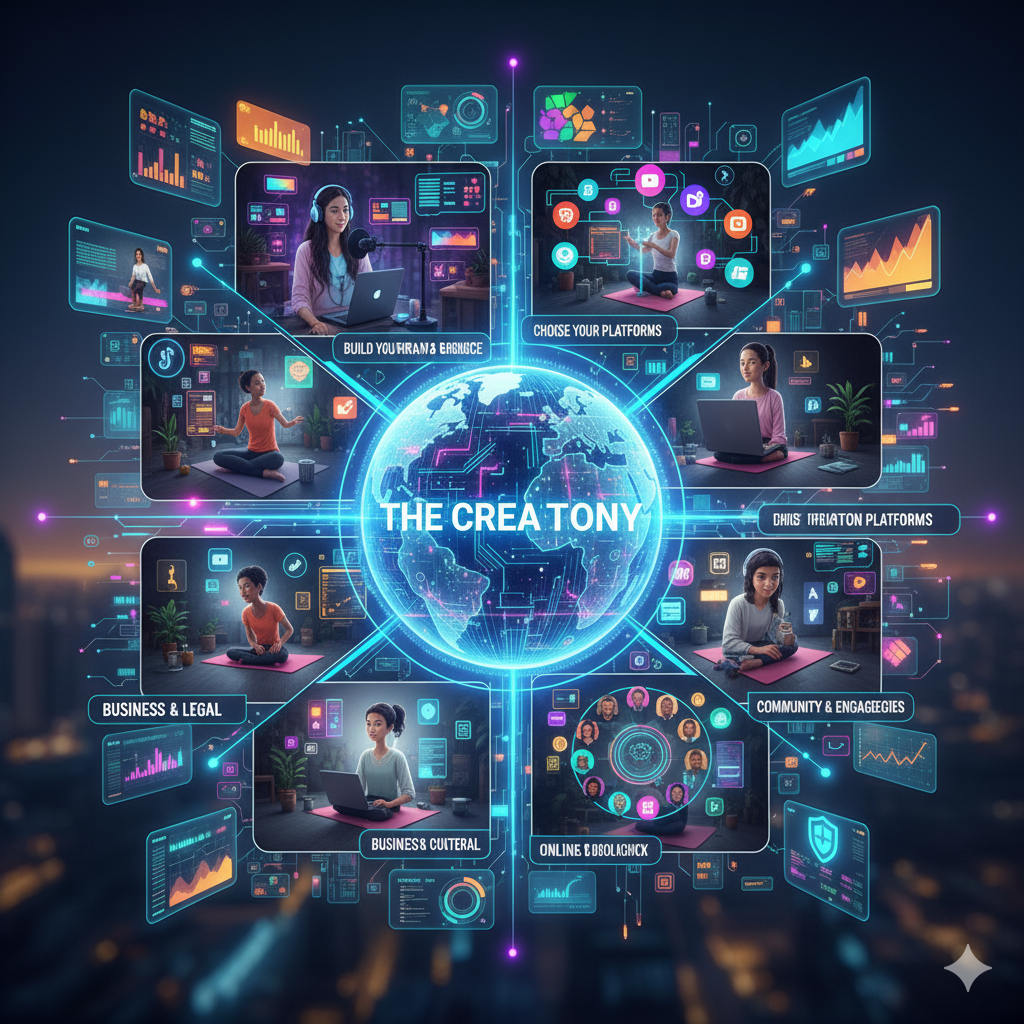
Introduction: The New Rules of Online Business
The old playbook for online business is officially broken. Business models that once seemed like a sure thing—drop shipping, generic online courses, and low-effort AI channels—are the exact ones I would advise any new entrepreneur to avoid. The reason is simple: AI has demolished the barrier to entry, flooding the market with generic, copy-paste offers that are immediately replaceable.
So, what’s thriving? The answer is the Creator Economy. This isn’t just about influencers taking aesthetic travel pictures; it’s a global market worth over $190 billion that is projected to more than double by 2030. This is the new frontier for digital entrepreneurship.
This guide will introduce you to the three main pathways for building a real, sustainable business within this booming economy. By understanding these models, you can find the right fit for your skills and ambitions.
Let’s break down the different ways you can find your place and build something unique in the creator economy.
1. The Three Paths to Success in the Creator Economy
Within the creator economy, there are three primary ways you can build a business. You can be the creator yourself, you can provide a high-value service to other creators, or you can sell a specialized product that helps creators succeed.
1.1. Path 1: Creator-Based Business
This is the most direct path, where you are the face of the content you produce.
- YouTuber: Creating and publishing video content on a specific topic.
- Podcaster or Streamer: Creating audio-only shows or live-streaming content for an audience.
- Blogger or Writer: Creating written content in the form of articles, newsletters, or online publications.
1.2. Path 2: Service-Based Business
This path allows you to offer your skills to support other creators, capitalizing on the trend without being in the spotlight.
| Example Role | What They Do |
| Video Editor | Edits long-form YouTube videos or short-form content like Reels and TikToks for busy creators. |
| Thumbnail Designer | Designs the compelling preview images that make people click on YouTube videos. |
| Content Repurposer | Takes a creator’s long-form content (like a video) and turns it into short-form posts for other platforms. |
| Digital Business Manager | Manages projects and operations, acting as a ‘second in command’ so the creator can scale their business without being tied to daily tasks. |
1.3. Path 3: Product-Based Business
This path involves creating and selling assets, tools, or knowledge that other creators need to grow their businesses.
- Templates & Digital Assets: Selling pre-made resources that save creators time and effort.
- Examples: Niche YouTube thumbnail templates, Canva carousel templates, caption packs, or video editing packs (LUTs).
- Knowledge Products: Creating and selling courses, paid newsletters, or ebooks that teach a specific, valuable skill.
- Examples: A course on a unique video editing style, or a paid newsletter with YouTube growth tips for business owners.
- Subscription Models: Creating a recurring revenue stream by offering ongoing value to a community or customer base.
- Examples: A paid community for a specific hobby, a monthly recipe membership club, or a digital asset library with a monthly fee.
Now that you understand the three main business models, let’s explore the single most important strategy for succeeding with any of them: finding your niche.
2. The Key to Success: Find Your Niche
The central rule for success in today’s online world is this:
Specificity is beating the broad and generic.
Trying to help everyone with everything is a failing strategy. The low barrier to entry means that generic markets are completely oversaturated, and any non-specific offer is “immediately replaceable.” The only way to stand out is to get specific and carve out a unique space for yourself.
It’s so much easier to own a niche like let’s say notion templates for ADHD entrepreneurs than to compete in a generic lifestyle thing of like I help all entrepreneurs with all things of their business.
This might sound limiting, but it’s actually liberating. You don’t need to serve everyone to build a successful business. Consider the math: if your product is $100, you only need 1,000 people to buy from you in one year to have a $100k business.
Now that you know the power of a niche, let’s look at a few major trends where you can apply these focused ideas.
3. Hotspots of Opportunity: Top Trends to Watch
While the Creator Economy is vast, we will focus on three powerful trends that offer clear entry points for new businesses. These are just the start, but they represent some of the most fertile ground for growth right now.
3.1. Short-Form Video (Reels, TikToks, Shorts)
Short-form video is no longer just a tool for going viral. For serious businesses and creators, it has become a form of “short loop market research”—a powerful way to test messages, hooks, and ideas before committing to a larger project.
- Service (Short-Form Video Editor): Many business owners and creators don’t have the time or skill to edit their own short-form videos. This creates high demand for editors who can create engaging, scroll-stopping content.
- Product (Editing Course/Templates): If you have a unique skill, you can package that expertise into a course or sell templates. The key is specificity: don’t just teach ‘video editing,’ teach ‘how to create cinematic short-form videos on a mobile phone,’ a niche with proven demand.
3.2. The Rise of Nano & Micro-Creators
This is a massive, untapped opportunity. Nano-creators (under 10k followers) and micro-creators (under 100k followers) are thriving because their specificity helps them stand out in a crowded market. It is also far more realistic to pitch your services to them than to a creator with millions of followers.
Pro-Tip: When pitching your services to smaller creators, make sure they are already monetized. Look for signs that they are making money, such as paid sponsorships or products in their bio. This is a critical qualifying step. Pitching creators who cannot pay is a waste of your time and effort.
3.3. Online Communities
As the online world gets bigger, people are craving “smaller cozier circles” and “real life connection.” This is a fundamental human need that AI cannot easily replicate, making communities a powerful and defensible business model.
- Service (Community Facilitator): Many paid communities need help organizing events, hosting discussions, and managing members. You can offer your services as a community manager, freeing up the founder to focus on their CEO duties.
- Product (Membership Club): You can build your own paid community from scratch. Success here relies on finding a specific, underserved community, like the source’s example of a crocheting club, rather than a generic ‘self-improvement’ group.
These trends are just a starting point. The key is to find a specific problem within a growing area and solve it.
4. Your First Step Into the Creator Economy
As you begin your journey, remember these three core principles that will guide you toward building a successful and sustainable online business.
- The online business landscape has shifted; originality and specificity are now the keys to success.
- You can participate in the massive Creator Economy by being a creator, providing a service, or selling a product.
- Finding a specific niche is more powerful and achievable than trying to appeal to everyone.
Your first step isn’t to build a website or create a logo. It’s to do research. Watch a ‘day in the life’ of a creator you admire. What are their pain points? What do they complain about? The answer to that question is where you’ll find your business idea.





Leave a comment