The fitness industry often wants you to believe getting in shape is expensive and complicated and requires a special building full of intimidating equipment. After analyzing dozens of guides from top trainers, organizations like the American College of Sports Medicine, and vibrant online communities, I’ve found the opposite is true.
The most common barriers to working out—cost, space, equipment, and complex routines—are not the ironclad obstacles we think they are. A few simple, powerful truths consistently emerged from my research, revealing that effective fitness is far more accessible than most of us believe.
Here are the six most surprising and impactful takeaways that can completely transform your approach to working out at home.
Six Surprising Truths About At-Home Fitness
1. You Don’t Need Equipment, Just Your Body and a Plan
It’s easy to think that real strength training requires a rack of dumbbells or a set of complex machines. But a theme that emerged again and again in my research was the power of the original resistance tool: your own body. According to Healthline, bodyweight exercises are a proven method to “help build strength and muscle mass, improve aerobic fitness, and manage fat mass.” The American College of Sports Medicine (ACSM) confirms that meaningful resistance training can be accomplished with nothing more.
This is a powerful realization because it does more than just remove the financial barrier. It creates a profound psychological shift. Fitness is no longer something you buy; it’s something you build. This moves the locus of control entirely to you, reframing the journey as one of personal capability, not consumerism.
RESISTANCE TRAINING BENEFITS EVERYONE! As we age, we tend to lose lean muscle mass, which is a condition known as sarcopenia. Resistance training helps maintain and combat the loss of muscle mass by increasing muscular fitness. This form of training can also prevent osteoporosis by augmenting bone mineral density.
— American College of Sports Medicine (ACSM)
2. High-Intensity Doesn’t Have to Mean High-Impact
Many people associate high-intensity interval training (HIIT) with jumping, loud thuds, and jarring movements—a major roadblock for those in apartments or with sensitive joints. But the idea that intensity requires impact is a myth.
A quick search on community forums like Reddit reveals a huge demand for “no jumping” and “low impact” workouts, and fitness channels like MadFit on YouTube have built a massive following with videos titled “NO JUMPING (Apartment Friendly Fat Burning Workout).” These routines are designed to be quiet yet intense, using dynamic, full-body movements like oblique twists, lunges with arm swings, and half burpees to raise your heart rate without a single jump. This makes intense cardio truly accessible, regardless of your living situation or joint health.
3. The “Perfect” Starting Point is Surprisingly Simple
Beginners often fall victim to “paralysis by analysis,” overwhelmed by complex multi-day workout splits found online. The most surprising consensus among experts, however, was just how simple a truly effective starting point can be.
The American College of Sports Medicine (ACSM) provides clear, straightforward guidelines for healthy adults beginning a strength training program:
- Frequency: A minimum of two non-consecutive days each week.
- Volume: One set of 8 to 12 repetitions.
- Scope: Eight to 10 exercises that target the major muscle groups.
This is empowering because it lowers the barrier to entry from a monumental commitment to a manageable one. It stands in stark contrast to the all-or-nothing mentality that derails so many, proving that significant health benefits can be achieved with a minimal effective dose of effort.
4. Your Apartment is a Gym (and Your Wall is a Secret Weapon)
The “I don’t have enough space” excuse is one of the most common reasons for not working out at home. However, expert sources repeatedly confirm that a small, dedicated area—often no bigger than a yoga mat—is all you need.
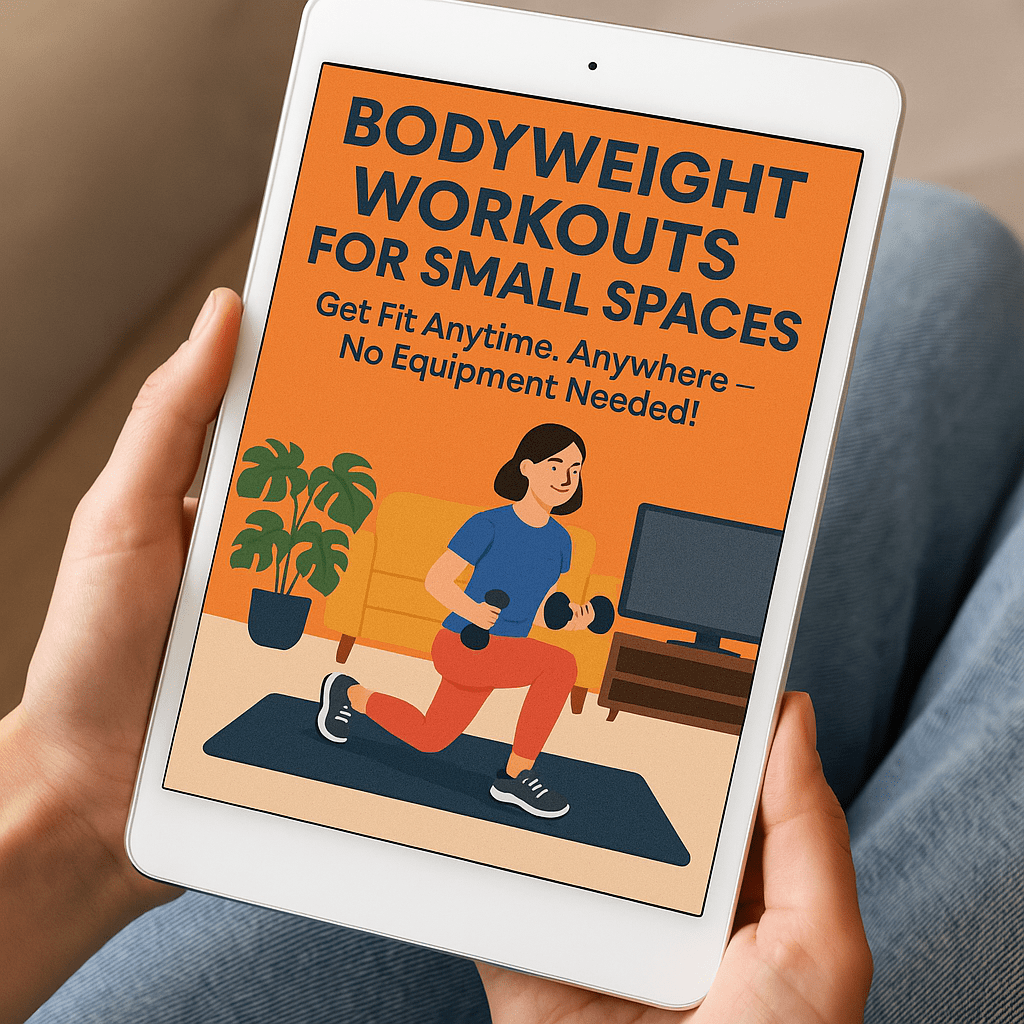
The real mindset shift comes from seeing your environment not as a limitation, but as a resource. An ordinary wall can become your first and most versatile piece of home gym equipment. For example, “Wall Pilates Workouts for Small Spaces” highlights how exercises like wall push-ups and wall squats—variations of fundamental movements lauded by sources like Healthline—can build strength without taking up any floor space. It’s the ultimate zero-cost, space-saving fitness solution.

5. Real Progress Comes From Smarter Variations, Not Just Heavier Weights
In a gym, progress is often measured by adding another plate to the barbell. At home, progress is smarter. The principle of progressive overload in bodyweight fitness doesn’t require buying heavier weights; it relies on modifying exercises to make them more challenging for your muscles.
Healthline provides clear examples of how to scale common movements as you get stronger by making small adjustments to leverage and stability.
- Beginner: Knee Pushup → Advanced: Standard Pushup or One-legged Pushup
- Beginner: Bridge → Advanced: Bridged March or Single-Leg Bridge
- Beginner: Plank → Advanced: Plank with Alternating Leg Lift
This concept is crucial for long-term consistency because it provides a clear and free path forward. It’s not just about getting stronger; it’s about developing kinesthetic awareness and mastering the mechanics of your own body—a form of “body intelligence” with benefits that extend far beyond the workout itself.
6. Your Best Personal Trainer Might Be Free on YouTube
Personal training was once a luxury reserved for those who could afford it. Today, this old, exclusive model has been dismantled. Expert-led, high-quality fitness coaching is available to anyone with an internet connection, completely free. This democratization of fitness was a constant theme across sources, from Reddit communities to guides like PROIRON.
Channels like MadFit and Yoga with Adriene are frequently cited as go-to resources for structured, follow-along workouts. They offer the guidance, motivation, and programming that removes the guesswork from fitness, eliminating the barriers of both cost and knowledge and putting expert coaching in everyone’s pocket.

The Only Barrier is Getting Started
The journey to at-home fitness is fundamentally more accessible and far less complicated than it is often made out to be. The biggest hurdles are not a lack of space, equipment, or money; they are the myths we’ve been led to believe.
By embracing these truths, you are now empowered to build an effective, sustainable fitness routine using the resources you already have: your body, your home, and a bit of creativity. The only barrier left is the one in your mind.
What’s the one small, simple move you can make today to start your at-home fitness journey?







Leave a comment