Introduction: Beyond the Recycling Bin
If you’ve ever felt overwhelmed by the constant stream of sustainability advice, you’re not alone. The pressure to “do the right thing” for the planet can feel immense, often leaving us confused about where our efforts will have the most impact. This article cuts through the noise to reveal five of the most surprising and powerful truths about sustainability, based on recent research. These insights offer a fresh perspective on what it means to live green in the modern world, moving the conversation beyond the recycling bin and into the systems, psychologies, and technologies that are truly shaping our future.

——————————————————————————–
1. You Care About the Planet—Your Brain is Just Getting in the Way
Contrary to popular belief, the greatest obstacle to sustainable action isn’t that people don’t care—it’s that our own brains get in the way. A study of college students at Virginia Tech, for instance, found that an overwhelming majority hold pro-environmental values, with 92% agreeing that “humans are seriously abusing the environment.”
Despite these strong beliefs, there is a clear disconnect between values and behavior. Researchers call this the “value-action gap.” The Virginia Tech study identified the three most prominent psychological hurdles preventing people from translating their beliefs into action:
- Conflicting Goals and Aspirations: It’s simply too hard to change established habits and lifestyles, and sustainable actions can feel like they interfere with other life goals.
- Lacking Knowledge: People often feel confused by the sheer amount of information and aren’t sure where to start or what actions are most effective.
- Industry Causing: There is a strong feeling of unfairness that individuals are expected to change when industry is perceived as the main cause of environmental problems.
Furthermore, a study on food choices in South Africa highlights the role of cognitive dissonance. When our actions don’t align with our beliefs, it creates psychological discomfort. To reduce this discomfort, our brains can employ denial as a defense mechanism. This isn’t a sign of not caring; it’s a way of coping. This insight is crucial: it moves us beyond scolding people for inaction and toward the more productive work of dismantling the real psychological hurdles that stand in our way.

2. The Real Problem with Your Old T-Shirt Isn’t Just the Landfill
For decades, our economy has followed a linear “take-make-dispose” pattern. We extract resources, manufacture products, use them, and then throw them away. But a new model is gaining traction: the circular economy. This is a system designed from the outset to reuse, repair, remanufacture, and recycle resources, keeping them in a closed loop and eliminating waste.
The fashion industry is a perfect example of this shift. In response to the industry’s massive environmental footprint, the EU has adopted a “Strategy for Sustainable and Circular Textiles” to push for greater circularity. A recent Mintel report notes that economic pressures are also accelerating this change, driving the popularity of resale platforms like Vinted. This shift toward a circular mindset is crucial, because the value-action gap discussed earlier is shockingly apparent in fashion. One report found that “over three-fifths of younger millennials in the UK returned items they had purchased in the last three months, adding to the amount of textiles ending up in landfills.”
In response, innovative brands are embedding circularity into their business models. For example, Uniqlo now offers repair services in some of its stores, while the German brand hessnatur buys back its own used products to recondition and resell them. This shift is powerful because it reframes waste not as an inevitability but as a design flaw. It turns a massive environmental problem into a business opportunity for innovation, resale, and repair.
——————————————————————————–
3. The EV Debate Is More Settled Than You Think
A common debate surrounding electric vehicles (EVs) is whether they are truly “cleaner” than gasoline cars once you account for battery manufacturing and the electricity used to power them. A comprehensive white paper from the International Council on Clean Transportation (ICCT) directly addresses this by performing a wide-ranging life-cycle assessment.
The core finding is unambiguous: Battery Electric Vehicles (BEVs) have “by far the lowest life-cycle GHG emissions.”
When comparing an average medium-size BEV registered today to a comparable new gasoline car, the lifetime emissions are significantly lower across major global markets:
- Europe: 66%–69% lower emissions
- United States: 60%–68% lower emissions
- China: 37%–45% lower emissions
- India: 19%–34% lower emissions
One of the study’s most counterintuitive points is that recent data from industrial-scale battery production shows significantly lower manufacturing emissions than were assumed in earlier, more critical studies of EVs. Looking ahead, the report concludes that as electricity grids around the world continue to decarbonize, this lifecycle emissions gap will grow even larger, cementing electric vehicles not just as an alternative but as the clear heir to personal transportation.

4. Your Next Salad Might Come From a Skyscraper (and Save 95% of the Water)
Vertical farming is an innovative agricultural practice where crops are grown in vertically stacked layers, often indoors in highly controlled environments. While it may sound like science fiction, it’s a practical and rapidly growing solution to some of agriculture’s biggest challenges. Its most surprising benefit is its incredible water efficiency, a direct result of its design. Unlike traditional farming, where water is lost to soil and evaporation, most vertical farms use closed-loop hydroponic systems.
In some cases, vertical farmers are able to use up to 95% less water than a traditional farmer, depending on the crop and the irrigation system.
Other key advantages of this method include
- Crops can be grown year-round, completely independent of weather conditions.
- It is ideal for urban areas, allowing food to be grown closer to consumers and reducing transportation emissions.
- The controlled indoor environment minimizes the need for pesticides.
The technology isn’t without its challenges, including high initial setup costs and significant energy needs for lighting and climate control. While not a silver bullet for all agriculture, its revolutionary water efficiency makes vertical farming a non-negotiable tool in our future toolkit for building resilient, water-secure cities.

——————————————————————————–
5. The Most Powerful Green Action Isn’t Recycling—It’s Refusing
While recycling is a well-known and important habit, it isn’t the most effective principle in the zero-waste philosophy. A more powerful hierarchy of actions places a simpler, more proactive behavior at the very top. The 5 Rs of zero-waste living are, in order of impact: Refuse, Reduce, Reuse, Recycle, and Rot.
The principle of “Refuse” is about proactively declining items you do not need, thereby preventing waste from being created in the first place. This means turning down the disposables that litter our daily lives—the plastic straws, the takeout utensils, and the complimentary tote bag you’ll never use.
This principle is so powerful because it stops waste at its source. It prevents the consumption of raw materials, the energy used in manufacturing, and the resources required for end-of-life management like recycling or landfilling. In contrast, recycling is a reactive process that still demands significant energy and resources to collect, sort, and reprocess materials. Adopting a “refuse first” mindset is one of the simplest yet most profound shifts a person can make on their journey to a more sustainable lifestyle.
——————————————————————————–
Conclusion: A Smarter Path Forward
We’ve seen that the real barriers to a greener world are not a lack of compassion but a web of cognitive biases; that the biggest design flaw isn’t in our products but in the linear economy that creates them. True sustainability challenges us to look beyond individual actions and see the larger systems at play—from the design of a t-shirt to the design of a city.
Now that we know the problem is less about a lack of care and more about complex systems and psychological friction, what is the one small, surprising change you can make that goes beyond the recycling bin?
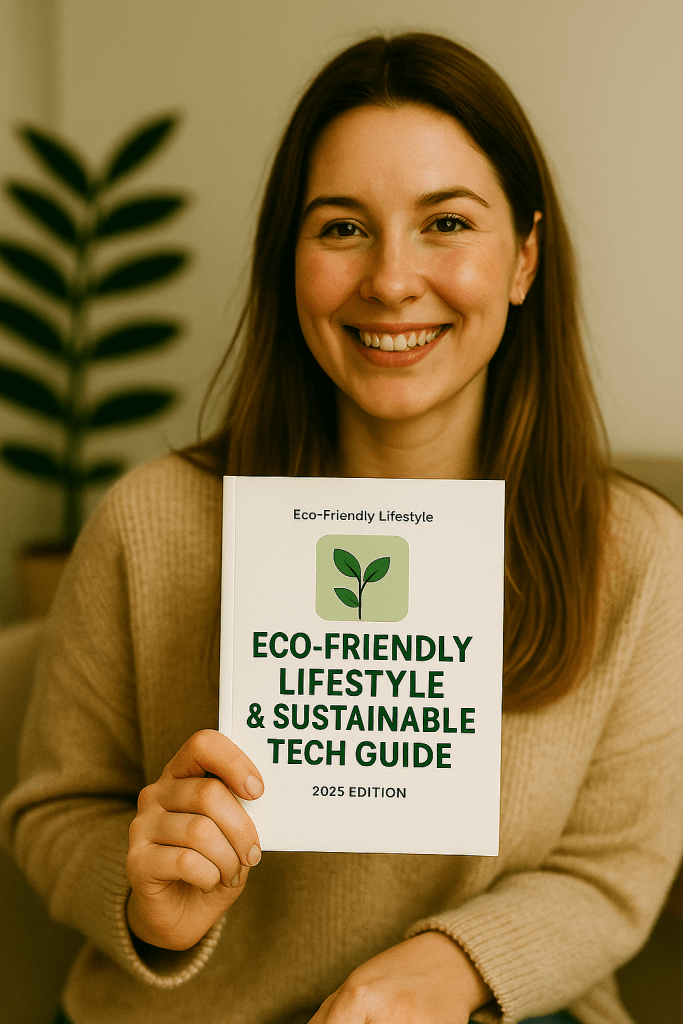
If you’re ready to take your sustainability journey beyond theory and actually make meaningful, lasting changes in your daily life—check out my Eco-Friendly Lifestyle & Sustainable Tech Guide (2025 Edition). 🌱
This beautifully designed, printable guide is packed with real-world strategies, buying checklists, and sustainable tech tips to help you live smarter and greener—without the overwhelm. It’s perfect for beginners and eco-enthusiasts alike.
👉 Grab your copy here: https://payhip.com/b/EleYb





Leave a comment